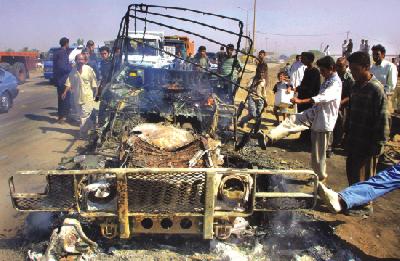
4 US soldiers killed in Baghdad attacks
Imam, 8 Iraqis die in mosque blast
Reuters, Baghdad
Four US soldiers were reportedly killed in Baghdad Tuesday, with attacks on coalition forces showing no sign of letting up, as a series of unexplained blasts overnight left six Iraqis dead. The US military was unable to confirm the reported rocket-propelled grenade attack in central Baghdad which witnesses said killed four soldiers and wounded two. US forces also faced claims that the explosions at a mosque in the flashpoint town of Fallujah west of the capital, were caused by its missiles. A coalition official was unable to confirm the cause, saying only that the military was still investigating the incident. The mosque's imam, Sheikh Laith Khalil, died from his wounds on Tuesday night, bringing the blast death toll to nine, local people said. His death is sure to worsen tension in the already restive town of Falluja, a hotbed of Sunni Muslim anti-US sentiment since the fall of Saddam Hussein. Locals said the explosion was the result of an American air attack and some swore revenge against Americans. But the commander of US forces in the town, 30 miles west of Baghdad, flatly denied the accusation. "There was no US warplane involved. There was no artillery from US troops. It was simply an explosion inside a building adjacent to the mosque," Colonel Joseph Disalvo said. Mourners marched from the damaged mosque to bury five of the dead, firing automatic rifles in the air and waving Iraqi flags. "America is the enemy of God!" they chanted. "Avenge the killings!" There was no sign of US troops along the route of the procession. Falluja residents said they would bury three more people later in the day. Four other people had been wounded. "The blood of those who were martyred in the mosque will be avenged," said one local man, Mohamed Shesab. Disalvo did not say what he thought caused the blast. Local residents said the US may have believed the mosque compound was used to store explosives for militants but insisted it had only been used for religious purposes. Residents said the blast late on Monday had destroyed the room of the imam in the mosque compound as well as damaging the mosque itself. They said religious scholars had been attending lessons. The string of attacks on American troops followed the twin embarrassments on Monday of a key Shiite Muslim leader pouring cold water on coalition plans to draw up an Iraqi constitution, while a US-appointed governor was arrested on kidnap charges. In a separate incident on the southern highway near Yusufiyeh, about 20 kilometres (13 miles) south of Baghdad, two US soldiers were injured when their vehicle plunged into a deep hole in the road, witnesses told an AFP photographer who went to the scene. While some witnesses said attackers then fired a rocket-propelled grenade at a second vehicle that had come to assist, others said Iraqis had approached the vehicle and poured gasoline over it before setting it on fire. In Washington, officials said the attacks on US and allied forces were expected to continue despite aggressive action to stop them, while insisting efforts to pacify and stabilise Iraq were on track and not getting bogged down. At least 21 US and six British soldiers have now been killed as a result of hostile action since the war was declared effectively over two months ago, on May 1. "We're in a global war on terrorism and there are people that don't agree with that," Defence Secretary Donald Rumsfeld said at the Pentagon. "If you want to call that a quagmire, do it. I don't." Officials in the US administration have struggled to defeat perceptions the occupation of Iraq has stalled amid almost daily attacks on coalition troops and the slow progress of reconstruction efforts. Those were again hit when Grand Ayatollah Ali al-Sistani, considered a "moderate", slammed the US-led coalition's plans to appoint a body to draft a new constitution, saying the occupation forces were not authorised to do so.
|