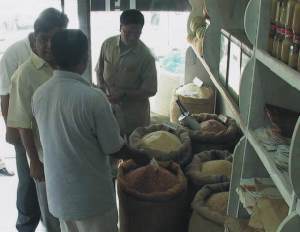
Going organic gets trendy
Shahnila Azher
In Dhaka, organic food has now become easier to find than even two years ago. Its popularity has been increasing day by day signifying tremendous prospect. Shashya Prabartana, Proshika and Meena Bazaar are currently offering such products. Having started at different times and with varying goals in mind, these outlets have starkly contrasting business approaches. Organic foods are produced without the use of chemical fertilizers and pesticides, genetic engineering, growth hormones, irradiation and antibiotics. A variety of agricultural produce, including grains, meat, dairy and eggs can be produced organically. The movement, that gained a huge momentum worldwide in the 1990s, preserves both human health and environment by encouraging farmers to use environmentally non-intrusive methods. Shashya Prabartana began production in 1988 on a small scale with sales initially taking place at village levels. The products were made available at its Mohammadpur outlet in Dhaka in 2000. The outlet is part of an NGO, UBINIG, which runs and manages centres in Tangail, Cox's Bazaar, Pabna, Kushtia, and Noakhali based on a methodology they call "Nayakrishi Andolon". The Andolon essentially emphasizes ecological agriculture, food production without the use of chemicals and pesticides, its director Shahid H. Shamim said The unique marketing programmes undertaken by Prabartana include a "Bhaat Mela" exhibiting 1,027 types of rice and "Daal Mela" displaying over 200 types of pulses. Prabartana customers are regular, people buy from this place on a routine basis attracted by the indigenous varieties of staples available. Proshika has been focusing specifically on organic food production since last three years. Through the Proshika centres, contract farmers in ten upazilas have been trained to grow a variety of vegetable products using natural means. According to Nirmal Chandra Bepari, coordinator of organic vegetable production at Proshika, a critical aspect of organic farming is its marketing which is beyond the scope of the farmers. This is where Proshika's distribution channels have proved to be useful. Using its own channels, Proshika supplies vegetables to selected outlets and offices. The latest venture in this field is Meena Bazaar, which started commercial sale of organic products in November 2002 as a unique selling proposition for its superstore shoppers. The entrepreneurs of Meena Bazaar, having acres of farmland in northern Panchagarh district, now produce rice, mustard oil, milk, tea, honey and a wide variety of fruits, vegetables and herbs with medicinal value. Organic products of Meena Bazaar are packaged with recyclable materials and sold at the superstore. The response has been enthusiastic from upper-income households, said Meena Bazaar consultant Kazi Jamil Islam. All three sellers witnessed rapid increase in demand though none was willing to cite specific figures. However, there is definitely room for more players to come in this segment to meet the requirements of the expanding market. Abroad, organic foods are always priced at a premium, costing 20 per cent more on an average than non-organic products, because of higher production costs. But the scenario here is different with pricing generally being at par or nominally higher. Explanation is the same for all outlets: vegetables go through 1012 intermediaries before reaching the consumer and the middlemen enjoy a major share of profits. Organic food exports, globally, is a big business. Seventy per cent of the 600 million pound sterling organic food market in the U.K. is imported. According to the current producers, export potential of Bangladeshi organics seems like a realistic ambition. Meena Bazaar has already received export orders for its tea and the others have also exports incorporated in their long-run plan. With health consciousness on the rise, marketing of organic products is likely to grow in tandem. Studies show that organics are not essentially healthier than those grown under non-organic conditions the nutritional content is identical. But the absence of synthetic residues on organically grown produce definitely makes for a safer product. Moreover in Bangladesh, with pressure groups like Bangladesh Poribesh Andolon (BAPA) lobbying for public awareness and appropriate regulation against indiscriminate and hazardous chemical use, organic food products will surely gain higher acceptance by middle-class households in the immediate term.
|