Prepare for an earthquake, top developer urges government
Bangladesh sits in an active seismic zone, steps should be taken for safe rescue
Monjur Mahmud
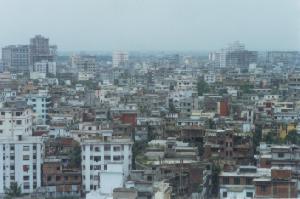
As Bangladesh sits in an active seismic zone, immediate steps should be taken for retrofitting key installations for smooth rescue operation after a tremor, said SM Kamaluddin, a leading developer. Administrative buildings, hospitals, fire brigade offices and schools should be retrofitted as part of an earthquake preparedness programme (EPP), he said. Lying along the Myanmar-Assam tectonic plate that extends from the foothills of the Himalayas to the Bay of Bengal, Bangladesh is extremely vulnerable to quakes, both moderate and severe. Continuing rescue operations will not be possible if the installations are hit, said Kamaluddin, chairman of Concord Group of Companies, a leading real estate firm. "The best thing that we can do is to remain prepared for the disaster that an earthquake brings in its wake," he said. "We should keep in mind that people are not killed by an earthquake," he said, adding rickety buildings and buildings made of brittle materials like non-reinforced brick masonry falls in a heap, causing deaths. "Buildings should be made of ductile materials so they can accommodate a good deal of ground motion without collapse." Columns largely tend to get twisted in the open ground floor car park in apartment complexes in a quake, he said. But it is possible to keep parking intact at the same time providing enough block walls with reinforcement and grouting so that adequate shear walls become available to withstand horizontal thrust, he added. Such modification should be taken up soon in all such buildings already built or is in the process of being built, he added. Pointing to another weakness in the buildings of Dhaka, he said solid bricks were used as in-fill materials between columns. These exert unnecessary load on the frame without contributing to their strength, making them vulnerable during an earthquake. The Bangladesh National Building Code 1993 advocates the use of hollow bricks and hollow concrete blocks to reinforce structures against seismic thrust, Kamaluddin said, adding unfortunately nobody paid any attention and brick buildings continued to thrive. Brazil, a weak economy, has developed a design using reinforced concrete block masonry (RCBM) that enables it to construct high-rises in a configuration that protects individual building elements against earthquake force coming from any of the four directions, he said. The effect of an earthquake on a building depends basically on its distance from the epicentre, soil type, total weight and structural type and configuration. "We cannot choose where an earthquake might hit, this factor is beyond our control. It is practically not possible or cost-effective to try and change soil type. But designers and builders can control to a great extent the other two factors -- weight and structural configuration," he said.
|