Lest we forget
Aziz-ul Haq
An architect of rural development
Hari Pada Bhowmik
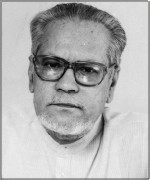
It is always painful for me to recall that Mr Aziz-ul Haq is no more with us. He left us forever on 3 September last year. I see his demise as passing of a legend. We can miss his physical existence but he lives and will always live in the hearts of people, followers, fans and friends for all time to come. Mr Haq was an architect of rural development, a meritorious government servant, and a veteran Rotarian. A thinker, philosopher and guide to many a person, he was also a good planner, administrator, organiser and policymaker. For his contribution to the aged, the Help Age International UK recognised him as an "Unsung Hero". Born in February 1923 at Chandla village under Brahmmanpara police station of Comilla district, Mr. Haq comes of a respectable Muslim family. Among his three sisters and one brother, he was the eldest. His father late Muhammad Sharafat Ali was a government servant. Mr. Aziz-ul Haq started his career as a college teacher in 1944 soon after he passed the university degree. In 1945, he joined the Civil Supply Department of the then Government of Bengal and served as Sub-District/District Controller of Food. After independence in 1947, he opted for Pakistan. At first he joined the Central Government Secretariat at Karachi, Pakistan in the Ministry of Education and then in the Ministry of Industries. In 1957, Mr. Haq was made Managing Director of the then East Pakistan Small Industries Corporation. Later on he became the chairperson of the Corporation. During his tenure he helped establish small industrial estates at the district level. In the mid-sixties, he was transferred to East Pakistan Industrial Development Corporation. He received the award Sitara-i-Khidmat (1970) for his meritorious services to the people as a government servant. Mr. Haq worked as the Chief Executive of the then Pakistan Academy for Rural Development (PARD), now known as BARD, during 1968-73. As its Director, as a friend and a great follower of Dr. Akhter Hameed Khan, he used to wear "Khadi" (locally made cloth). He organised village people of Comilla to adopt innovative projects to increase yield of crop and enhance income. Thus he helped promote self-help movement with self-management and self-reliance principles through rural cooperatives. As UNICEF's Special Consultant in Bangladesh (1974-76), he was active in post-liberation rehabilitation of primary schools and primary training programmes, and in initiating the Manually Operated Shallow Tubewells for Irrigation which later on became an important development programme. UNICEF also honoured him with the Regional Award for Services to Mothers and Children. In the year 1976 he was appointed as an Adviser to the Ministry of Agriculture and Forestry and then became a Minister in the Cabinet of the Government of Bangladesh. During his tenure, he contributed a lot to reduce, protein-gap and vitamin-gap by taking up extensive dry-season cropping, intensive transplant rice cultivation, and crop diversification programme with an emphasis on horticulture and community forestry. He was also instrumental in establishing Centre on Integrated Rural Development for Asia and the Pacific (CIRDAP) in Comilla. Different countries were interested to have CIRDAP headquarters in their territory. But it was Mr Haq's relentless diplomatic effort that made Bangladesh fortunate. He acted as FAO's advisor to contact potential member countries and was elected as the Chairperson of the Preparatory Conference that was preceded by the World Conference on Agrarian Reform and Rural Development (WCARRD) in 1979. As the founding Director of CIRDAP, during 1979-84, he maintained useful contacts with relevant ministries and institutions on rural development in the member countries in the Asia-Pacific region. Started with six-member countries in 1979, the number of CIRDAP member countries rose to eleven at the time of his retirement in 1984. At present CIRDAP has 13 members. Since its inception, FAO and Japan continued their financial support to the Centre -- FAO towards its administrative budget and the Government of Japan towards its programme fund. We can recall fond memories of his words. In his speech, as a guest speaker at the 10th Anniversary of CIRDAP, in the inaugural session, Mr. Aziz-ul-Haq, said "I wanted to make CIRDAP great, not grand." He played a pioneering role to set up Rotary Club of Comilla while he was in Comilla as Director of BARD. In June 1970, the Rotary International affiliated it into the global family of Rotary Clubs. Aziz-ul Haq was the Charter President of that club. Later on, in recognition of his outstanding service, the members of the Rotary Club of Comilla named their club building after him as "Aziz-ul Haq Centre." Comilla people learnt a lot from him about production of fish-fry and agriculture, the way people learnt from Dr Akhter Hameed Khan about irrigation system and cooperatives. As the first District Governor (1984-85) of Rotary International District 328, Bangladesh, he organised district Rotary programmes. He proposed adoption by the Rotary International of a global programmes named ROFA (Rotary's Fight Against Hunger) and Operation Lift (Livestock, Fish, Fruits, Forestry) for Bangladesh. He always sought for greater involvement of Rotary in increasing productivity of Bangladesh agriculture. At the Rotary International Assembly in 1987, he was an Instructor/Group Discussion Leader. Mr Haq was appointed as the Chairman of the Santosh Islami University Board of Trustees in 1988. As Chairman he rendered honorary service to the Islamic educational complex for promotion of work-oriented education.. In the year 1988, he was the Team Leader of local and foreign experts to study Cooperatives in Bangladesh, a subsidiary short-term project of the Government of Bangladesh in collaboration with the World Bank, UNDP, CIDA and DANIDA. He was a member of the Board of Trustees, Asian Institute for Rural Development (AIRD), Bangalore, India -- a non-government organisation with an International Board of Trustees. My association with Mr Haq for more than a decade is always a soft memory of mine. I started my service life under his close guidance and supervision. I learnt a lot of useful things from him, which, I believe, will go a long way in my life. As his personal assistant, I gathered some practical experience in various fields. I found him as a great man of commitment, punctuality, active and hard-working. He had a vast knowledge on rural development economics and on its scientific application. Mr. Aziz-ul Haq was a veteran public servant and a dedicated rural development volunteer. Since his retirement from the government service, he was more active in getting things done. He believed that in a developing country a thing done is a lot more valuable than a lot of more things that are left undone. He enjoyed and continued to serve the less privileged, the children, the aged and the poorest, the farmers and the artisans until the end of his life. Hari Pada Bhowmik works at CIRDAP Finance Department.
|