Flash back
The first cultural delegates of the country
Stirring pleasant memories
Sadya Afreen Mallick
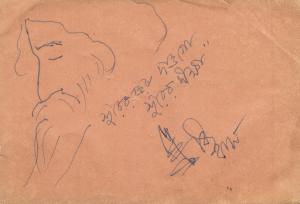
The roads seemed unusually jammed the next day, as everyone seemed to reach the same venue in haste. As we reached the Victoria Memorial Palace grounds, the radiant glow of the sun had for the time being settled on the horizon. The massive assemblage of people all around waited in bated breath, to watch the performance of artistes from both West Bengal and of the newly independent state of Bangladesh.Girls in white Jamdani sari's with multi coloured embroidery and boys in off white silk Punjabi's looked elegant. As we took the stage the patriotic songs, created a wave of passion and sent messages of warmth and friendship to those who had sacrificed so much during our nine months of struggle for freedom. Asaduzzaman Noor, a very prominent figure in our cultural field today, read out spirited poetry pieces, creating a spark among the spectators. The dance pieces directed by Sharmin Hasan were choreographed with the patriotic songs mostly set to tune by Sheikh Luthfur Rahman. Abu Zafar Obaidullah's poem Kumro phuley phuley sinchronised with a dance piece, stirred memories of the martyrs of the liberation war, never to return to the empty laps of their wailing mothers. The total presentation including Michael Madhusudan Dutt's play Buro Shaliker Ghare Ro directed by Laila Samaad was well appreciated by the audience and the print media. Eminent news caster Debdulal Bandyopadhaya interviewed the troupe members and brought out a special feature in Ultorath, a very famous magazine. Legendary singer Shuchita Mitra and other noted singers of West Bengal, Orgho Sen, The Calcutta Youth Choir, headed by Ruma Guhothakurta and many others presented their best at the cultural meet. We as guest artistes had the privilege to interact with artistes of great repute of India for the next few days. The following evening, many of us were invited to Maya Sen's house, who at that time was at the pinnacle of her career as a Tagore singer. What came as a total surprise to us was, George Da', Devabbrata Biswas and Konika Bandiopadhaya the living legends of Tagore songs were coming too. As we waited patiently, Devabbrata Biswas appeared in his usual calm yet majestic manner. Dressed in his usual attire of a gerua lungi and panjabi, a bag made from coarse cotton hung from his shoulders. A pair of ordinary slippers adorned his feet. As he entered, we gazed into the expressive eyes of the maestro. Devabbroto spoke in pure east Bengal dialect, which hadn't changed even after he had migrated from Kishoreganj of earstwhile east Pakistan a long time back. Many of us who were seeing the maestro for the first time noticed in awe how the legend epitomised humility. Sitting on a high tool, he pulled the harmonium close to him. As everyone listened to his magical voice from a close distance, none bothered to hide the tears which trickled down the cheeks. Devabroto suffered from asthma, therefore he preferred to sing baitalik or songs with out rhythm at that time. His passionate renditions I thought were comparable to that of Kamol Das Gupta or Shideshwar Mukhopadhya, whom I had the rarest opportunity to listen to, from a very close distance later on. Ruma Guhathakurta and her Calcutta Youth Choir were a vibrant group of artistes creating a ripple in the field of patriotic songs then. Her co-artiste Dhirup Guhothakurta, visually impaired artiste Shwapan Gupta, Maya Sen, Purobi Mukhopadhyaya, Orgho Sen, Sontosh Sen Gupta, Ritu Ghatak were also present on that day. Some rendered songs after the maestro, transcreating music which spoke nothing short of devotion and the Devine. Camera was an expensive buy, instead an autograph book worked as a perfect match with my purse. For the next few days it was my constant companion. Every now and then I pulled it out from my purse and held it out to people who had reached the level of excellence. Last Friday, while looking for a book in my library downstairs, something popped out from the bookshelf and fell to the ground. It was the autograph book. A very prized possession of mine, lost so many years back. I reclined on a chair as I waltzed through the memory lane..
|