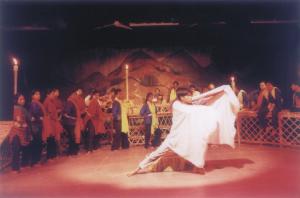
Meemangchina, a neo-ethnic drama
Culture Desk
Department of Drama and Dramatics of Jahangirnagar University stages Meemangchina as part of their experimental theatre work. The play represents the culture and heritage of the Garo tribe. Before this production, the department staged some other neo-ethnic plays on the Chakma and Marma tribes.Meemangchina belongs to neo-ethnic theatre which is a modern concept. The ethnic theatre represents the socio-cultural anthropology of a particular tribe based on myths and fables. But when the socio-cultural anthropological history is blended with modern culture and represented on the stage, it is called a neo-ethnic theatre. Dr. Afsar Ahmed is the playwright, director, music composer, costume designer and choreographer of the play. The Garo word 'Meemangchina' means a colourful cloth which is used during the funeral of an aristocratic Garo. In the play we get the story of a Garo girl named Hrishika, a university student, who is suffering from an existence problem because of the diffusion of modern beliefs in her cultural background. After returning from the university, she takes part in a cultural programme where she plays the role of Shirangging, a mythological character. She finds a feeling of oneness with this character. Hrishika wants to say so many things to her beloved beside the river Someswari. The blue Someswari and the midnight moon symbolically appear as Meemangchina to Hrishika. In case of direction, Dr. Afsar Ahmed tries to represent two parallel women--one from myth and the other from reality. That is why his approach is a successful narrative. Afsar Ahmed has used a bamboo fence to represent the Garo village symbolically. Shaibal Srabosti's light design is as usual very simple. All the artistes of the play are the students of the department and there has been a lot of enthusiasm and participation from all.
|