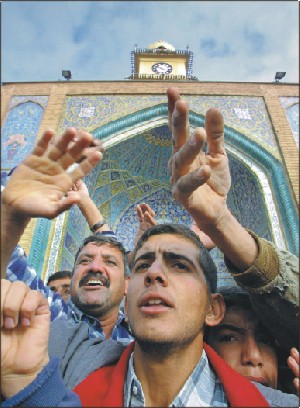
US troops kill 54 Iraqis in a fierce firefight
AFP, Baghdad
American troops have killed 54 suspected Iraqi insurgents, which Iraqi medics say included eight civilians, in the northern city of Samarra, capping the worst weekend of violence in seven months of occupation which saw the deaths of seven Spaniards, two Koreans, two Japanese, two US soldiers and a Colombian.US commanders previously said they killed 46 Iraqis, all of them insurgents, in the clashes Sunday afternoon and evening, which they described as the heaviest faced in Iraq by the 4th Infantry Division (4ID) which patrols the region. They yesterday upped the death toll to 54, without specifying whether the additional dead were insurgents or civilians. In another incident, an American soldier was killed west of the Iraqi capital Baghdad yesterday after his patrol came under attack from guerrillas, the US military said. A medic at Samarra hospital said the bodies of "eight civilians including a woman and a child," were received at the hospital. It was not immediately clear whether the figure included two Iranian pilgrims said to have been killed in their bus. Hospital director Abed Tawfiq told AFP "more than 60 people wounded by gunfire and shrapnel from US rounds are being treated at the hospital." He said there were so many casualties from US fire during the intense clashes with insurgents who ambushed American convoys in the town Sunday afternoon and evening that they had had to be treated in the hospital's corridors. The town's police chief Colonel Ismail Mahmud Mohammed said around 20 of the wounded sustained their injuries while worshipping at a mosque during sunset prayers. He said the insurgents who had attacked US forces had already withdrawn when the Americans returned fire, and charged that the troops had done so indiscriminately with all weapons in their arsenal. Lieutenant Colonel Bill MacDonald, a spokesman for the 4ID, previously described the events in Samarra as the biggest attack on the division in Iraq to date and said all those killed had been attackers. US military and residents alike spoke of multiple attacks around the city, where Washington's public enemy number two in Iraq, Izzat Ibrahim al-Duri -- Saddam Hussein's longtime deputy and the alleged paymaster of many attacks against the coalition -- maintained two houses that were destroyed by US warplanes in mid-November. The troops "repelled multiple ambush attempts on two separate logistical convoys, killing 46 attackers, wounding at least 18 and capturing eight" during the afternoon, said the US spokesman. He said US forces destroyed three buildings used in the attacks and notably fired tank guns against the attackers, who were wearing the black uniforms of pro-Saddam Fedayeen fighters. "We're sending a clear message that anyone who attempts to attack our convoys will pay the price," said MacDonald. The US military has taken off its gloves in its battle with Iraqi insurgents in the past couple of weeks, launching massive counter-insurgency operations both in and around Baghdad and in the 4 ID's operational area in north-central Iraq. Sunday's bloodshed topped a series of assaults on the US-led coalition and its allies in Iraq over the weekend, taking the lives of seven Spanish intelligence agents, two Japanese diplomats, a Colombian and two South Koreans as well as two American soldiers, in what US commanders called a deliberate attempt to intimidate Washington's allies. Meanwhile, three men suspected of belonging to Osama bin Laden's al-Qaeda network were captured by US troops in the main northern Iraqi city of Mosul, a US military spokesman said Monday. The suspects, whose nationality was not disclosed, were arrested in Mosul two weeks ago and transferred to Baghdad, said Major Hugh Cate from the Mosul-based 101st Airborne Division. US President George W. Bush's administration has long argued that toppled Iraqi president Saddam Hussein's regime had links with bin Laden's militant network. US-led coalition forces in Iraq contend that large-scale suicide bombings are carried out by foreign militants whereas light weapon and rocket attacks against their troops are typically perpetrated by Iraqi insurgents.
|