Passion for flowers blossoming
Charlotte Jacquemart
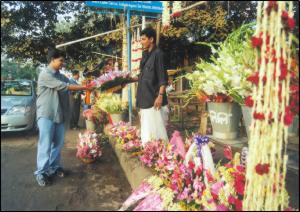
Dhaka wears the look of a city of flowers with the arrival of winter.There are more than 400 flower shops and the numbers are continuing to grow. However, wholesale traders claim that they are making little profit at present. "We have seen better days in the past in terms of profit," said Md Sikim, who has been involved in wholesale trading in horticulture for more than 13 years. As more people get into the flower business, they have to sell flowers on credit to retailers, he adds. But the wholesalers are bound to pay farmers in cash to buy the flowers. The shop owners do not have any such complaints. "We have to employ at least five people to look after the shop as business is swelling," says Md Masud Khan of Malancha in Shahbagh, one of the oldest flower shops in Dhaka. The main income of the flower shops does not come from daily sales of flowers and flower baskets, but rather from weddings, parties or decoration of bridal cars. From one such order, a shop can make as much as Tk 50,000, claimed a flower trader. Flower shops have turnovers of approximately Tk 2500 a day, selling two variations of tuberoses as the most popular flowers, eight variations of gladiolas, up to eight variations of ordinary roses and also some other varieties. Shahbagh is the heart of the city's flower trade. Nearly 700 farmers and wholesalers arrive here around five in the morning to participate in an auction. "Every one of them sell flowers worth atleast Tk 1000," informs Masud Khan. Peak seasons are the months of November, December, January and post-winter February and April. During the holy month of Ramadan business is usually dull, but in the days leading up to Eid, prices for all flowers tend to increase. In fact, it rose by about 20 per cent this Eid-ul-Fitr. Not too long ago, flowers were mainly imported from India. Now they are grown in different areas of Bangladesh. Though Godkhali of Jessore is the pioneer area in growing flowers, it is also being cultivated at Savar, Gazipur and Tongi. Besides, farmers in some other districts including Rangpur and Dinajpur have also started to grow flowers as they have found it a profitable venture. Orchids, which had to be brought from Bangkok in the past, are also now exclusively grown on Bangladeshi soil. Some big companies are exporting orchids to Saudi Arabia and South Korea. Tuberoses are being exported to Dubai. According to traders, the quality and longevity of flowers can be improved through proper handling and cold storage facilities. Flowers now last for 3-5 days at most. But the small traders are in no position to invest the kind of money needed to for better facilities. So established and wealthy entrepreneurs should come forward in helping horticulture to flourish in Bangladesh.
|