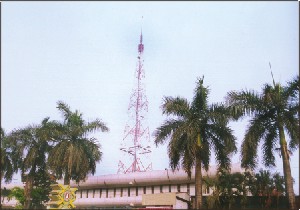
BTV goes satellite next month
All set for round-the-clock transmission
Avik Sanwar Rahman
Bangladesh Television (BTV) will launch round-the-clock satellite transmission in the first week of April to beam programmes around the world. "It went on test transmission to detect technical faults," said BTV Director General (DG) Mustafizur Rahman. According to an agreement, BTV will have to pay a yearly rent of Tk 1.75 crore to AsiaSat 3 for 24 hours of satellite transmission. An earth up-link station and other equipment were installed at a cost of Tk 3.75 crore. BTV is now running its terrestrial transmission 14 and a half hours: 7:00am to 9:30am in the morning run and 12 hours from noon to midnight before it signs off. For 24-hour transmission, the programme department will have to fill the slot of another nine and a half hours. "The last-minute adjustment and design of programmes are going on," Rahman said, adding BTV plans to fill the slots with archived and new programmes and updates on English and Bangla bulletins. The growing demand for BTV, especially among Bangla-speaking expatriates around the world, prompted the state-owned television to go satellite. But Bangalees in many countries cannot get access to all satellite channels of Bangladesh because of government policies, cable operators' interest and technical hurdles, although they are free-to-air channels. Viewers need several dish antennas to down link programmes of all channels -- which is costly -- as the channels are not using the same satellite. The channels are using different satellites to up link programmes: Thaicom Satellite for ATN Bangla, ApStar for NTV and PanamSat 4 for Channel i. "People of other countries would have watched all Bangladeshi channels, if they had used a single satellite," said an expatriate in Oman in a letter to The Daily Star. In a Thimphu summit of the Saarc (South Asian Association for Regional Cooperation) Audio-visual Exchange programme from March 12 to 13 -- the DG said -- a resolution had been passed for all national television channels in the member countries to air programmes in the region. The resolution now awaits diplomatic nod. "We are communicating with diplomatic missions especially in Saarc and Middle Eastern countries for BTV's satellite transmission," Rahman said. "The Saarc members also decided to communicate with the cable operators as well so that channels could be seen in other countries," the DG said. "We are also planning to produce programmes in English for the international audience."
|