Theatre
Kafka metamorphosised
Avant Garde Theatre presents its new play Amriter Shandhane at Mahila Samiti Auditorium
Afsar Ahmed
According to one definition, it is the plight of the existentialist to contemplate the intricate nature of human life, and to be overwhelmed with anxiety about the futility of his/her own existence. The existentialist sees the misery of human actions and decisions, all which end in death, with no real explanation for why it all occurs. This existentialist paradox was captured in Avant Garde Theatre's Amrit er Shondhane in the character of Mohinrecently. Held at Mahila Samiti Auditorium, the play is based on Franz Kafka's Metamorphosis and adapted from the Bangla translation of Budhhadeb Bhattacharya's Poka and Shakti Sen Gupta's Bikaar.Avant Garde Theatre, a renowned theatre in Chittagong, has already estabished its credentials with Nati Binodini and Tomosha. Their third production, Amrit er Shondhane, is directed and edited by Ashim Das of Fame School of Drama. The play Amrit er Shondhane unfolds with the central character Mohin, a young struggling artist. Mohin lives with his family and tries hard to support them financially. One morning he discovers that during the night he has been transformed into a monstrous vermin or insect. Mohin's case is much like that of any person suffering from severe, particularly disfiguring, chronic illness or disability. His life story and personal identity change dramatically when he becomes a vermin. In the new identity his senses are different. His abilities change. His voice is transformed. Some of his changes are generated from within; some are conditioned by the world's reaction to his metamorphosis. Other metamorphoses also occur in the story. His family sees his state as an affront to them (after all, they expect him to support the family). They withdraw from him, try to contain the damage, but in the process begin to change their own life stories as well. The change can also be seen as a reaction against bourgeois society and its demands. Mohin had been a vermin, crushed by authority and routine. He had been imprisoned by social and economic demands. In sum, Mohin's life has no meaning because he has found no real reason for living, and has no real motivation to make it worthwhile. His life is filled with anxiety and alienation from those he works and lives with, and he is consistently passive, and has no responsibility for his actions. While at first he seems selfless, it is apparent that he is not living for himself, and has no real reason for living. And thus the story ends with the tragic death of Mohin. The play exemplifies that people must find their own reason to keep on living and go on the path of their choice.
|
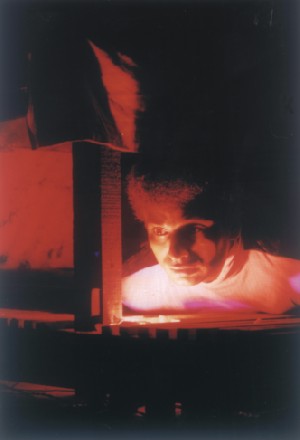
A sequence from the play Amriter Shandhane |

