HSBC eyes fast growing Islamic banking market in Bangladesh
Head of Amanah Finance, Malaysia talks to The Daily Star
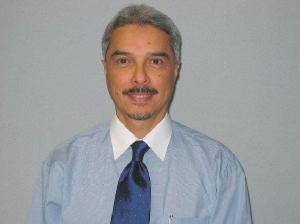
Mohamed Ross Mohd Din has been in The Hongkong and Shanghai Banking Corporation (HSBC) Ltd for more than three decades. He is currently the Head of Amanah Finance of HSBC Bank Malaysia Berhad. Prior to this assignment, he was Area Manager of the central region in Kuala Lumpur. His experience in banking includes Treasury & Foreign Exchange, which he headed for a number of years and during this time he also gained exposure in other financial markets in Hong Kong, London and New York. He also served as Head of Group Audit for the operations in Malaysia. Mohamed Ross talked to The Daily Star on HSBC's Islamic banking venture in Bangladesh. Following is the excerpt of the interview:The Daily Star (DS): What prompts the HSBC to enter the Islamic banking market in Bangladesh, where many full-fledged Islamic and other banks offer the services? Mohamed Ross (MR): There has always been a demand among Muslims for financial products and services that conform to the Shariah. Given a total population of more than 1.5 billion Muslims worldwide and an estimated industry size of $300 billion, Islamic finance is a serious business for Muslims and non-Muslims alike. HSBC recognises this demand, and its Islamic finance initiative, HSBC Amanah, is a direct response to the financial needs. HSBC Amanah is seen as a pioneer in the Islamic finance industry, being the first high street bank to offer a Shariah-compliant home finance scheme and current account in the UK. It has been recognised as Best International Provider of Islamic Financial Services and Best International Sukuk House in Euromoney's 2003 Islamic Finance Awards. Our clients in Bangladesh have clearly indicated to us that they prefer to bank with us in a Shariah compliant way. We understand the needs of our customers and this is why we have launched Amanah in Bangladesh. The local banking industry has a high growth rate (average 16 percent), with the Islamic banking niche growing even faster (28 percent). Present market size for local Islamic assets are estimated at over $1.6 Billion. DS: What products and services does the HSBC's Islamic branch offer right now? MR: Amanah branch in Bangladesh will cater to both corporate and consumer banking segments. Initially we will have two products -- Amanah Current Account (ACA) and Amanah Import Finance (AIF). Gradually other products will be rolled-out. ACA allows customers to have a bank account where funds deposited in the account are used only for Shariah compliant transactions as per the guidelines of HSBC Shariah Supervisory Committee. ACA will be comparable to existing conventional current account. AIF will allow customers to obtain post shipment finance under Shariah compliant 'Murabaha' contract, where the bank will first buy the goods and then sell the same to the customer at cost plus profit on deferred payment basis. The goods financed under AIF need to be deemed 'halal'. DS: Sharing of profits and losses is one of the salient features of Islamic banking. Will you bear losses as well as profits? MR: Losses as well as profits are shared between the bank and the customer in 'Musharakah' transaction, which is similar to equity investments or partnerships. Under 'Murabaha' transactions however the sales price and therefore the profit is fixed when one party sells the goods to another party. HSBC Group, through its various subsidiaries is a regular participant and operators in many equity investments and mutual funds. Through our Amanah Finance unit, we are also one of the biggest global arrangers of international Islamic finance. DS: What kind of competitions you are expecting from your rivals in local market? MR: We do not consider Islamic banks as our competitors, but rather as working partners. We would like to work with the existing players to increase the shelf space of the Islamic products and have received strong words of encouragement from them. In order to increase awareness within the banking professionals, local Shariah scholars and the community at large we plan to conduct training seminars by bringing Shariah scholars specialising in the field of Islamic finance from Middle East and Malaysia. We are also pleased and honored to have been the first foreign bank to be inducted in the Central Shariah Board of Islamic banks of Bangladesh. DS: What are the areas in Bangladesh's Islamic banking the HSBC is going to focus on? MR: HSBC Amanah will be focusing to the needs of the consumer bases inclined towards Shariah based banking. However, Amanah's product and services will be open to all. Any people or corporate regardless of their religion or caste can enjoy HSBC Amanah's product and services. DS: How do you make money unless you charge interest in disguise? MR: The bank guarantees the funds collected under the ACA and undertakes to pay them to the customer on demand. According to Shariah guidelines, since the capital is guaranteed, the customer cannot earn any kind of return on such funds. HSBC Bangladesh therefore does not offer any return on the ACA. While Amanah products do not generate any interest for the bank, they do earn profit. The buying and selling of 'halal' assets allow the bank to earn profit rather than earning money on money, which is interest. DS: Don't you think that it is a contradiction for a bank like HSBC, which normally operates on the basis of interest, to offer Islamic financial services? MR: HSBC's Shariah Supervisory Committee consists of eminent scholars in the field of Islamic finance. They review the operations of HSBC Amanah, supervise its development of Islamic products and determine their Shariah compliance. Conventional banks charge and pay interest, and HSBC is a conventional bank. But HSBC is also a customer-driven institution, and it provides Islamic products to serve their genuine financial need. DS: How can you ensure that your investments are in compliance with Shariah? MR: The funds obtained from our Islamic finance clients are maintained separately from conventional funds, so that interest from our conventional activities does not enter their returns. Most importantly, our products and services are developed in consultation with and approved by the Islamic scholars. The entire process ensures that HSBC's Islamic products are free of interest and within the guidelines prescribed by the Shariah. Funds deposited with the Amanah branch can only be invested in a Shariah compliant manner. The process and products of HSBC Amanah are regularly reviewed, and has to be approved by the independent Shariah Council. DS: When did HSBC start its venture into Islamic financial world? MR: HSBC Amanah Finance, the global Islamic financial services division of HSBC Group, was established in 1998. Headquartered in Dubai, HSBC Amanah has grown over the years providing services in Saudi Arabia, UAE, Malaysia, Indonesia, Brunei, UK and USA. DS: What are your future plans in Bangladesh? MR: Initially we are restricting our product ranges for complete Shariah compliance at every stage. Our plan is to provide full range of Shariah compliant products by 2006. In next few months we will launch time deposit, car & consumer durable financing scheme, usance letter of credit facility and local purchases. We plan to launch house mortgage by next year.
|