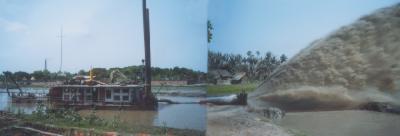
Kobadak dredging enlivens people
15 out of 36 km targeted for current FY dredged, rest to be done by June
Abu Ahmed, Satkhira
People, particularly farmers, are happy because their long-cherished desire is going to be fulfilled. The silted Kobadak, now being dredged by the Water Development Board (WDB), will get a new life and boost agriculture, trade and commerce in three districts including Satkhira. Starting from Sharsha upazila in Satkhira, the WDB will dredge 130 kilometres of the river passing through Jhhikargachha, Manirampur and Keshabpur upazilas in Jessore; Kalaroa and Tala upazilas in Satkhira and Kachhighata in Pakigachha under Khulna districts. About 15 kilometres out of targeted 36 kilometres for the current financial year has been dredged so far since the work began in November last year, WDB sources here told this correspondent. Five dredgers have been engaged. The river is being dredged up to 14 feet deep, which will ensure round-the- year flow and check flood by increasing its water retention capacity. WDB Sub-assistant Engineer Sunil Kumar Sarkar said dredging of 36 Kilometres of the river from Sharashkati to Kachhighata will be completed by June. It will cost Tk 20 crore. "The river will get its normal flow when 130 kilometres from Sharsha to Kchhighata will re-excavated. "It can be completed soon if funds are available", he said. The project will cost Tk 100 crore, he said. But a WDB employee operating one of the dredgers seeking anonymity said the work remains suspended at times as contractors can not supply fuel regularly. Besides making about 27000 hectares of land flood-free and providing irrigation to over 71000 hectares for Irri-Boro and Aman cultivation in the three districts, the dredged river will boost trade and commerce in the area. Over two lakh farmers in Shrsha, Jhikargachha, Manirampur and Keshabpur upazilas in Jessore; Kalaroa, Tala and Assassuni upazilas in Satkhira and Paikgachha upazila in Khulna districts will be tremendously benefited. Agriculture Extension Department (AED) sources said additional 3.25 lakh tonnes of food grains will be produced every year once the project is complete. Once mighty Kabodak is almost dead now as its bed has been silted in the last four decades, causing immense sufferings to the people because of recurring floods from overflow of banks during monsoon. Due to waterlogging in vast areas on both the sides of the river after floods, farmers can not grow crops. In winter, the river dries up at many points, affecting irrigation. It turns into streamlets in Jhhikargachha, Sharashkati, Chingra, Patkhelghata, Bardal, Tala and Kachhighata areas, affecting trade and commerce as even boats can not ply. The silted river is not only depriving the people of their livelihood but also creating pollution and health hazards. People in the areas staged agitation demanding the re-excavation of the river. The WDB efforts are being hailed by people of all classes. "Our long cherished desire is being fulfilled", said Anwarul Islam, Chairman of Deara Union Parished in Kalaroa upazila, who is also a farmer. "This will sop flooding and help us grow crops", he said.
|