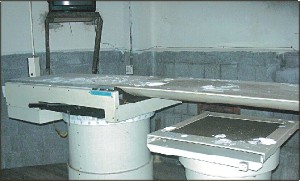
Cancer machine gathers dust
Thousands of patients go without proper treatment at DMCH
Naimul Haq
Three pieces of expensive medical equipment for cancer treatment worth over Tk 5.6 crore are gathering dust for more than five years at Dhaka Medical College Hospital (DMCH).For reasons unknown, these precision instruments, considered vital for accurately locating and treating cancerous tissues, were never used since their installation and have been left uncared for in pathetic conditions at the country's premier public hospital. Official sources said at least 2,500 patients, who could have been partially or completely cured with the help of these instruments, are denied treatment every month due to non-availability of these machines. The Tk 3 crore radiotherapy simulator and the Tk 2 crore brachytherapy machine (called Cobalt 60 after loading brachytherapy) used worldwide to treat cancer in advanced stage were delivered to the hospital in June 1998. Abdul Aziz, chief executive of Mardel Agencies that supplied the two Chinese machines, said the company could produce papers certifying that the DMCH authorities received the machines in good working conditions. Doctors and technicians at the hospital also said the machines had been put through test runs before being handed over. These two machines along with a German-made computer planner have apparently suffered extensive damage as they have been left in rooms without any ventilation or air-conditioning for the last five years. A spot visit revealed the way these expensive equipment have been left to go to ruin in a shocking waste of public money. Cement plasters loosened from damp ceilings have fallen on the machines and engineers said the computer software running these sophisticated machinery has also been damaged by moisture from rainwater seeping into the control rooms. Although the hospital has a fully-fledged building repairing unit from the PWD (public works department), there has been no initiative to repair the damaged walls even when rainwater enters the closed rooms. Dr Parvin Shaheda, associate professor of the hospital's radiotherapy department, said: "Every day we diagnose an average of 150 patients, mostly women, with cervical, oral and windpipe cancer, but we are unable to provide any treatment as the brachytherapy machine is not available for use. The chances of cure with cobalt brachytherapy are 60-100 percent." She said the Tk 2 crore brachytherapy machine, used worldwide for treating advanced stage of cancer, is the only means to cure cancer in internal tissues or organs, often completely. Without the radiotherapy machine, oncologists (cancer specialists) are forced to resort to a highly risky and inaccurate method of manually determining the location of tumour and the dose of radiation, which can lead to unnecessary damage of healthy tissues while administering radiotherapy. On the other hand, the computer planner, which reads X-ray images of tumour and helps locate precise position of the cancerous cells, is vital for precision treatment before external or internal beam of cobalt rays are exposed. According to Siemens, the supplier of the Tk 60 lakh computer planner, Tk two lakh is needed to put the device back into operation. "We have written to the DMCH authorities two months ago, but they never responded," said Hafizur Rahman, head of Siemens' medical division. Hospital sources said the DMCH authorities might decide to dump the machines to make way for new machines that are reportedly in the pipeline. Dr Golam Mohammad, head of DMCH radiotherapy department, blamed the situation on improper installation of the machines. "It is very unfortunate that not a single cancer patient has ever received treatment with the machines. In fact, the machines could never be used as the installation was incomplete." He alleged that a section of officials in the health ministry benefit from "shady deals" involving purchase of such "obsolete machines". "Such outdated machines are no longer in use anywhere in the world. Bangladesh is a dumping ground for outdated medical equipment," he added. Brig General Nazmul Huda, director of the DMCH, said: "Repairing the machines will not be 'cost effective'. We are going to introduce more advanced technology -- linear accelerator -- which is more precise and cost effective."
|