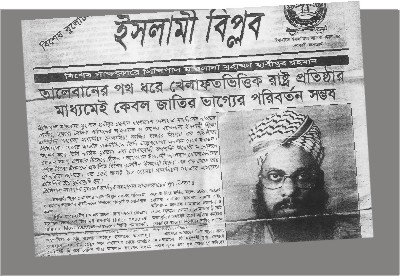
Madrasa man with 'Taliban link' under sharp watch
Julfikar Ali Manik, from Sylhet
A madrasa principal with a history of working to establish a Taliban-style rule in Bangladesh came under sharp intelligence watch in the wake of Friday's bomb blast at Hazrat Shahjalal Shrine in Sylhet.Mowlana M Habibur Rahman, who runs Jameya Madania Madrasa in Kazirpar in the northeastern district, is believed to have had close ties to the now-routed Taliban in Afghanistan for years and travelled to the southwestern Asian country during its Islamic militant rule, sources say. Police turned the spotlight of investigation on several Islamic institutions, including Rahman's, after the bomb blast injured British High Commissioner to Bangladesh Anwar Choudhury and killed three. A special bulletin, Islamic Revolution, published Rahman's interview in 1998 after he returned from Afghanistan. "Only the Taliban ideology and a society based on the Khilafat (pan-Islamic movement) can change the nation," said Rahman, also leader of Khilafat Majlish and Shahaba Sainik Parishad, in the long interview, where he also named nine Islamist leaders who accompanied him to Afghanistan. Azizul Haq (district unknown), Mowlana Ataur Rahman Khan from Kishoreganj, Mowlana Sultan Jowk from Chittagong, Mowlana Abdul Mannan from Faridpur and Mowlana Habibullah of Noakhali figure on the list. Rahman also said the team visited the Harkatul Jihad office in Pakistan in its stopover in Karachi and met Islamic outfit leaders there. Rahman was instrumental in the movement demanding death to writer Taslima Nasrin and prevented poet Shamsur Rahman and anti-collaborator leader Jahanara Imam from visiting Sylhet. The high-profile Islamic leader told The Daily Star that an officer of the Rapid Action Battalion -- part of the investigating team -- met him and sought help in investigation. But he brushed aside the suspected roles of his organisations in the blast, second in five months at the 700-year-old heritage site, and denied his links to the Taliban. "We have nothing to do with the Taliban … we follow Islam," Rahman said. Sources say detectives have found documents of the Islamic organisations and their leaders in an intense hunt for any link between local and international Islamic militants and the bomb blast. Police also turned their attention to Harkatul Jihad and its suspected links with international militants as Rahman travelled to Afghanistan at the invitation of Harkatul Jihadin Islami described in his interview as an international Islamic movement. A senior detective told investigators during a US Federal Bureau of Investigation (FBI) probe that a bomb seized from a former prime minister Sheikh Hasina's rally in Kotalipara in Gopalganj in 2000 was planted by Harkatul Jihad. Police officials said Friday's deadly bomb attack threw the probability of Harkatul Jihad's role into sharp relief, as its leader Mufti Abdul Hannan, indicted in the 2000 case, remains at large. Police took a Harkatul Jihad member, Shamim, into their custody and released him after interrogation on Monday night. Intelligence agencies are also looking into a series of grenade attacks in Bangladesh and seizure of 20 grenades near the diplomatic enclave in Dhaka's Badda area in November 2003. Police collected several anti-British and -US posters of Hizb ut-Tahrir, another Islamist outfit, which were posted around the shrine a few days before the bomb attack on the Bangladesh-born envoy. The posters show pictures of Iraqis being abused by US-led coalition forces in Abu-Ghraib prison, with calls "Let's come and reject the democracy of the occupiers. Join the efforts to establish Khilafat in Bangladesh." Police high-ups shy away from official statements on the investigation. "All sides are being considered, but we cannot say anything now as the investigation is going on," said Investigation Officer SA Newaz.
|