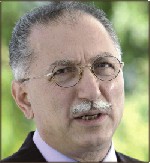
Ankara wins OIC top post race
Turkey's Ihsanoglu bags 32, SQ Chowdhury and Malyasia's Agam bag 12 votes each
Staff Correspondent
Bangladesh lost its bid for secretary-general of the Organisation of Islamic Conference (OIC) early yesterday despite its much-talked-about 'strong' campaign, as Turkey's candidate Ekmeleddin Ihsanoglu was elected with 32 of 56 votes by first-ever secret ballot.Bangladesh's candidate Salauddin Quader Chowdhury and Malaysia's Tan Sri Hasmy Agam received 12 votes each in the election where all member countries, except for Guinea-Bissau, were present. As Ihsanoglu was short of six votes to get a two-thirds majority needed to win, Bangladesh and Malaysia decided to withdraw and allow him to hold the post for a four-year term from January next year. "The Bangladesh candidate was the first to announce his withdrawal," Egyptian Foreign Minister Ahmad Maher, who proposed the formula of withdrawal, told AFP. The OIC members voted on the second day of the International Conference of Foreign Ministers (ICFM) of OIC in Istanbul, the largest city of Turkey. Elected rather than selected by consensus as before, Ihsanoglu, a 61-year-old historian, will succeed Morocco's Abdelwahed Belkeziz, whose mandate expires at the end of this year. "It is the first time that the OIC has voted in a secret ballot to elect its secretary general," AFP quoted Turkish Foreign Minister Abdullah Gul as saying and describing it as a sign of democratisation. The result came as a shock to Bangladesh that launched a one-and-a-half-year campaign, with Foreign Minister M Morshed Khan repeatedly claiming that Bangladesh's candidate had strong endorsement from at least 27 OIC countries in the 57-member grouping. Speaking to reporters at his office yesterday, Reaz Rahman, adviser to the foreign ministry, expressed disappointment at the defeat that came despite what he called an "organised, concentrated and sustained campaign". "Personally, I am disappointed. I also regret it." This was the first time Bangladesh did not withdraw its candidate from the race in an effort to secure the top OIC post. Both previous candidates Shamsuddoha during the rule of HM Ershad and Humayun Rashid Chowdhury during the rule of Awami League in 1999 backtracked at the request of other members in a last-minute decision. Several Bangladesh ministers, Salauddin Quader and special envoys visited nearly all member states in their campaign that included visits to key countries Saudi Arabia, Iran, Indonesia, Malaysia, Morocco and Senegal. Bangladesh was the first to announce its candidature for the current race and received strong support from Saudi Arabia, including a letter of endorsement from the Saudi crown prince, which was circulated among all OIC members. But the Saudi foreign minister could not turn up at the ICFM on Tuesday that dealt a major blow to Dhaka's campaign. Sources say most of the 27 countries that pledged support for Salauddin Quader gave verbal endorsement and only five countries, including Saudi Arabia, Indonesia and Brunei, gave written support. In a rotation system, candidates for the post were required to come from Asian countries. Ihsanoglu's election came as OIC foreign ministers met in Istanbul to decide whether to support the new interim government in Iraq and how security in the country can be boosted. At the ICFM, the Saudi representative proposed one-year extension to the Moroccan' incumbent until a consensus is reached, but Turkey had insisted upon an immediate election. Ihsanoglu, who speaks fluent English and Arabic, has served as director general of the Istanbul-based Organisation of the Islamic Conference Research Centre for Islamic History, Art and Culture. (Material of AFP and other agencies has been used in this report)
|