WFP may call for global food aid Monday
9,617 more ill with diarrhoea
News Desk
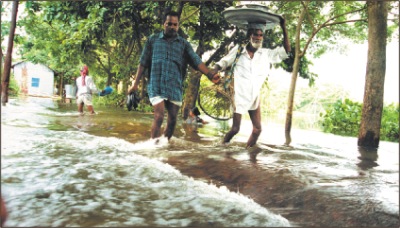
The World Food Programme (WFP) is likely to make a global appeal for food aid on Monday for flood victims ahead of the United Nations 'flash appeal' to the international community for emergency aid to the deluge-ravaged Bangladesh. WFP Country Representative Douglas Casson Coutts told the official news agency BSS that the preliminary assessment of food assistance was almost complete. The WFP will use food aid to launch a major emergency operation for five million ultra-poor flood-hit people that would be launched in the middle of this month, Coutts said. "We are going to fill the gaps of other initiatives to feed the vulnerable people and trying to reach the succours to the maximum number of people avoiding overlapping and duplication," he said. Coutts's statement came as the full impact of the floods that disrupted the lives of about 30 million people and released a disease epidemic began to emerge amid the desperate need of food and medicine for tens of thousands of flood victims living in temporary shelters. DISEASES RAMPAGE Medical teams were struggling to cope with a "massive" outbreak of diarrhoea and other waterborne diseases. Thousands of people, mostly children, are crowding district hospitals for treatment of diarrhoea, dysentery, intestinal infection, skin diseases and respiratory infections. Although 3,373 mobile medical teams are working in the flood-ravaged areas with an additional 919 temporary treatment centres, reports from different districts say they were not enough and it is often difficult to reach medical camps. "It is worse than we thought," said a man taking his sick son to a local doctor. The poor people are reeling from the immense crisis of drinking water and drugs. The high number of people sick with diarrhoea and other diseases overstretched the services of most hospitals and upazila health complexes, our correspondents from Sylhet, Gaibandha and Rajshahi said. According to the health directorate monitoring cell, 9,617 people were taken ill with diarrhoea in the last 24 hours and three children died from the waterborne disease. As many as 696 people have fallen sick with pneumonia, 215 people with skin diseases and 741 with dysentery. Intestinal infection is said to be widespread in the flood-affected areas but there is no specific report on how many people have so far fallen sick with the disease. The economic cost of the floods is rising: Manufacturers of readymade garments, Bangladesh's biggest export earner, fear a production loss of up to 75 million dollars, AFP reports. "We estimate there will be a production loss of about 2.5 million dollars each day for about four or five weeks as more than 1,000 factories are flooded," said Annisul Haque, president of the Bangladesh Garment Manufacturers and Exporters Association. "Those that are not flooded are not working because employees cannot reach their workplace," he told AFP, adding the industry normally has "very tight deadlines so something like this causes us problems. We hope buyers will be sympathetic and allow a delay in deliveries." The government said the floods have caused 6.6 billion dollars worth of damage to infrastructure and property. UN officials earlier said the severity of the floods stretched the government's response systems, prompting direct intervention of the UN agencies and donors in the relief campaigns to fill the gaps. (BSS and AFP contributed to this report)
|