Flood
Sajjad Waheed Uttara, Dhaka
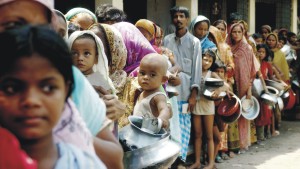
Professor AQM Sajjadur Rashid of Geography Department, Dhaka University and a specialist on disaster management has told the press a few harsh truths about flood management in Bangladesh. Most of the observations he had made were very much appropriate. Though we do not have any publicised data on 1974 floods, still we experienced one of the most devastating floods in 1988. A lot of water "flooded" us since then, and we have also seen the flood of 1998 and the deluge this year. According to Professor Rashid, we as a nation could not do anything to either prevent or minimise the loss due to flood, or learn any lesson on flood management . Professor Rashid has mentioned one of the most important issues: transparency in the governmental activities. If the government machinery were transparent then there would not be so many "housing societies" in the 'earth-filled' low-lying areas surrounding the city of Dhaka. The present housing minister Mirza Abbas has already blamed these housing societies for earth filling and for the entire flooding in Dhaka this year. Violation of existing rules and regulations with the help of corrupt government officials allowed some people to earn illegal cash through endangering the nature as a whole. We sincerely hope that the government shall punish those corrupt people within a short time. In addition, population boom is one of the biggest problems of Bangladesh. More we grow in number, more we become 'voters', and more we invite problems for ourselves. Very few of us can realise this phenomenon. Our political leadership use population growth as the increase in the vote-bank, and contradictorily campaign against the population growth. As a result proper education, health care, housing, food etc remain a distant dream for most of our citizens. More we become 'voters', more we need houses to live in, and more we need land to build houses. In this process we lose our cultivable land and low-lying areas. In other words, we wanted to direct nature against its will, and the nature took the revenge. ***The massive floods have brought about death and destruction to many in Bangladesh. However, the silver lining of the dark cloud are the many unknown people who are helping the needy in this hour of need without publicity or fan fair. These worthy people are indeed the proud and praiseworthy citizens of Bangladesh, dedicated to the highest ideal of service above self. During my morning walk in Gulshan, two instances, besides others, come to my notice. One is the unnamed (mentioned recently in The Daily Star) person who daily arranges around 1400 meals for the uprooted flood victims now temporarily sheltered in and around Road 114, 115, 116, Gulshan 2. The other is a lady who arranges food and other necessities for the sweepers families and neighbouring bustee residents who unfortunately are located in a sort of noman's land around the water body at the end of Road 2, Gulshan 1, and behind the end of Tejgaon Industrial Area. Maybe, NGOs could do something here for them. I feel proud of these big-hearted persons who are helping the neighbouring families . May Allah bless them in this life and beyond. SA Mansoor Gulshan, Dhaka ***Floods that lead to complete vulnerability and the plight of the affected are, should be, an agenda that deserves a prominent place in the humanitarian agenda. Reduced mobility means lesser visibility, lesser access and lesser voice. Translated in simple language, this means lesser survival chances. To better the survival chances of people with special needs during floods, and to address their long term needs call for an informed debate that is the responsibility of every constituent of the civil society, especially the media, academicians, activists and other interest groups. A 'reality check' by humanitarian agencies to ensure that vulnerability analysis is an integral part of their flood response programme. It is important that we should recognise flood-affected people not as just passive victims, but as active survivors. Recognising that humanitarian assistance is not an act of charity but a survival right of the affected, may be the first step to break the poverty-vulnerability-disaster cycle. Striking at the root of poverty, is the best way to reduce the numbers of those who have to be lifted out of floodwaters now. Sirajul Islam Social sciences researcher and consultant Pisciculture Housing Society Shyamoli Dhaka ***Bangladesh is virtually paralysed due to monsoon inundation. Forty one districts, even the low lying parts of Dhaka city, are affected by this flood. It has pauperised many people. The callous attitude of the government upset all of us. They could not help the flood victims that maximised the sufferings of the vulnerable. The relief purveyed by the government was paltry. The stubborn attitude of the government not to ask for relief from the foreign donors surprised me . Happily, flood water is receding across the country. But the government will have to handle the post flood situation very efficiently . The farmers have to be rehabilitated properly. The post flood pandemics should be combated with utmost care. To check the frequency of such kind of deluge, the government will have to take a master plan. Most of the rivers are silted. So they should be dredged to increase navigability. I hope the government will think anew to minimise the hazards of floods in Bangladesh. Molla Mohammad Shaheen Dept of English, Dhaka University
|