Intensify efforts for poverty-free South Asia: Khaleda
Agencies, Dhaka
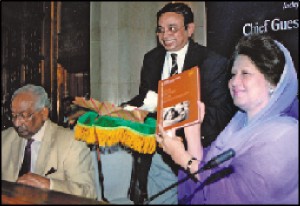
Prime Minister Khaleda Zia yesterday called on the South Asian nations to invest all their resources and strengthen their united efforts to materialise the dream of a poverty-free South Asia."A poverty-free Bangladesh, for that matter a poverty-free South Asia, is not an impossible dream," she said while launching of a report of the Independent South Asian Commission on Poverty Alleviation (ISACPA) at the International Conference Centre. All the possibilities for poverty reduction would have to be explored, she said and called for waging the battle against poverty on many fronts with unremitting vigour, commitment and vision. The 12th Saarc Summit in Islamabad endorsed the ISACPA report titled 'Our Future: Our Responsibility'. It has been launched in Nepal and Bhutan few months ago, the function was told. Finance Minister M Saifur Rahman and Foreign Minister M Morshed Khan also addressed the function chaired by ISACPA Co-convenor and Prime Minister's Principal Secretary Dr Kamaluddin Siddiqui. ISACPA Core Group Coordinator Dr Hossain Zillur Rahman gave a brief presentation on the report. Ministers, MPs, diplomats and representatives of donor and development agencies were present. The priorities and targets set in the ISACPA report are: mobilising the power of the poor, prudent macroeconomics, mainstreaming the informal economy, enhancing gender and other equities, sustainable development, and effective, harmonious and all-round cooperation among the countries of the region. It also set medium-term regional agenda halving poverty by 2010, eradication of malnutrition and ensuring universal food security, putting in place a social security system, halving the number of people without safe drinking water and sanitation and halving the number of people without access to primary education by 2010 and eliminating all forms of trafficking and child labour. The prime minister said her government has given highest priority to accelerating the fight against poverty and accordingly a full-blown Poverty Reduction Strategy Paper (PRSP) is now being finalised. "We have to ensure the necessary synergies between these national, regional and global strategies," she added. The fight against poverty is not the responsibility of anyone alone, she said, adding that the problems of poverty are so huge and complex that they require not only individual efforts but also collaboration at regional and international levels. Assistance from the development partners has also an important role in this regard, she observed. The prime minister mentioned that Saarc has traversed a long and difficult road and weathered many ups and downs to become the principal focus of a common South Asian aspiration today. "And no aspiration has been more urgent and more compelling than our common fight against poverty." Khaleda said Bangladesh is committed to fight against poverty and significant progress has been made in the social sector, particularly in education, health and social welfare. "Bangladesh has achieved the highest primary school enrolment in the developing world," she added. The prime minister said despite repeated natural calamities, the country has achieved a commendable growth rate which has increased from less than two percent in the 1970s to around five percent during the current decade. "Our infrastructural progress too has been noteworthy. Barely two decades ago, most of our villages suffered from remoteness. Today, virtually most of the villages are connected by all-weather roads." Despite all these achievements, Bangladesh has still a long way to go, she added. "This journey has to be a shared one. The problem of poverty cannot be solved from the top by the government alone." Khaleda said the NGOs and the community-based organisations have been playing a very important role in the fight against poverty. Grameen Bank has been a pioneer in the field of micro- credit, she said, adding that the government has established PKSF to provide concessional resources to the NGOs for their micro-credit programmes. Speaking at the function, Finance Minister Saifur Rahman said internal political support is necessary to develop a poverty-free South Asia. He denounced the political programmes that have been blocking economic activities and stressed the need for broad-based politics for reforms to alleviate poverty.
|