Tea Plantation in Panchagarh-3
No govt policy, infrastructure
BTB says no plan yet to set up processing plant: Politicos allege 'land aggression' by big companies
EAM Asaduzzaman, back from Panchagarh
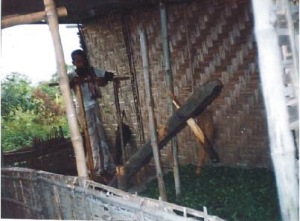
Nilphamari: The government has not yet formed a policy though the Bangladesh Tea Board (BTB) launched a five-year plan in 2002 to bring 300 hectares of under tea plantation in Panchagrh. So, infrastructures have not been developed and there is no sigh that those will be created in near future to help growth of a tea industry in the highly prospective area. It is surprising to many that the Panchagarh branch office of BTB, the sole government agency to look after country's tea sector, is still housed in a small rented structure in Old Panchagarh, with one of its rooms being used as Tea Research Institute. The BTB office is manned by a Senior Development Officer, a Development Officer and six other low-ranking employees. A Scientific Officer works in the Research Institute. All tea planters, except one big company, are demanding immediate setting up of a tea processing plant and some purchasing centres to save their gardens. But BTB sources said there is no immediate government plan for those. BTB Development Officer Amir Hossain said they have urged the commerce ministry to open a purchasing centre and fix the price of green tea leaves at Tk 8 per kilogram at the minimum, but to no response yet. "There is nothing to be surprised if plucked green tea leaves find their way through the border like our golden fibre jute because there are some purchasing centres just on the other side (of the border)", lamented local journalist Anwar Hossain while talking to this correspondent. To minimise the loss, small farmers have adopted a novel way. They dry the plucked leaves in cooking pans and grind those in husking paddles. Such scenes were seen in many areas including in Pedia Ganj and Dorjipara villages in Panchagarh Sadar upazila and Sonapatila in Atoari upazila. The tea thus prepared is sold at Tk 25-30 per kilogram in local tea stalls and markets. "In this way we minimise our loss to some extent" said small farmer Shahidul Islam at Buraburi village. He said this is an innovation made available to them by Tetulia Tea Company Ltd (TTCL), a small holding with about 16 acres of land. The TTCL, floated by a group including some tea experts, is seen by growers as a savior. TTCL Manager Monjurul Islam said they conducted a survey and found about 350 farmers interested to grow tea. TTCL is setting up a processing plant at Buraburi village at a cost of Tk three crore. The building for the factory has been constructed but it is uncertain when factory will start operation. Its officials said they are giving assistance to farmers in getting registration and bank loan, supplying tea saplings on credit and providing other technical assistance on an understanding that they will sell tea leaves to the company. A sapling is sold at Tk 3.50. Many farmers this correspondent talked to said they have been encouraged by he TTCL initiative and have started tea plantation. RAKUB (Rajshahi Krishi Unnayan Bank) Zonal Manager SM Shams Alam also said his bank recognises the TTCL as a guarantor for small farmers. Tea plantation in Panchagarh has also given rise to a major potential problem. In absence of any government policy, big investors from outside are purchasing lands from local farmers in large scale, at times through fraudulence in connivance with a section of dishonest land and revenue officials, local people said. Some local political leaders termed it "land aggression", saying this will increase the number of landless people. Talking to this correspondent, Panchagarh Krishak League Persident M A Rouf demanded a halt to this and assistance to small farmers for proper development of a tea industry in the area. Sources at Panchagarh land office said a company can purchase up to 500 acres of land for tea or rubber plantation. Another 500 acres can be purchased on special permission from the government. Lands purchased in the name of tea garden by some companies are being used for other purposes, some sources claimed. At many places, rock extraction is going on unabated by sinking deep tubewell, which is harming the environment and reducing the lands for tea plantation. Against all these problems, there are very bright sides also. Kazi and Kazi Tea Estate, the largest company in the area has proved that lands in Panchagarh can produce very high quality organic tea. Its official MA Mannaf, said their brands of organic tea are sold at between Tk 250 and 650 per kilogram in Chittagong auction while common varieties are sold at Tk 60-70. BTB officials also corroborated his statement. Mannaf said instead of chemical fertiliser and insecticide, they use cow dung and poultry litre as land nutrient and nim oil and Bishkatali (a herbal plant) to control pest attack. He said the company has 150 cows and 21 bio gas plants in the garden area.
|