Imported clothes flood markets ahead of Eid
Sabrina Karim Murshed
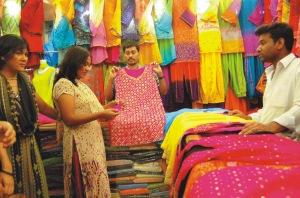
Local clothes especially fancy attire for men and women are outclassed by imported clothes that have invaded the bustling markets in the city ahead of Eid.Foreign clothing mostly imported from India, Pakistan and China have flooded most of the markets in which middle and upper income groups have access to. Apart from a few well-known sari stores that sell local handloom saris, most of the sari shops have shelved a wide range of Indian and Pakistani saris -- chiffon, crepe, zerdousi, kundan work or even expensive kanjibharam -- to allure the womenfolk. Posh markets like Eastern Plaza, Rapa Plaza, Prince Plaza and Sunrise Plaza are catering to the customers' craze for imported saris and lehengas that cost up to Tk 1.25 lakh. Even the Dhanmondi Hawkers' Market, crammed with people, offers plenty of Indian saris. Local salwar kameez or dress materials can hardly be found in Chandni Chawk Market. "We imported 600 pieces of three-piece (salwar kameez and dupatta) for the Eid market," said Nadiruzzaman, a salesperson at 'Libas' in Chandni Chawk. His store houses unstitched Indian and Pakistani salwar kameez ranging from Tk 600 to Tk 10,000. In some of the city markets, imported punjabi, kurta, sherwani, angrakha are irresistible attraction for men. "These are quite expensive, but there are certain class of shoppers who opt for these," said a salesperson at a shop in Vishal Centre in Moghbazar. Asked why they are not selling local clothes, most traders said they sell imported clothes as the customers demand it most. "Or else why would we import them bearing all the hassles," said Nazmul Haque Prodhan of 'Look and Like' at Basundhara Shopping Mall. Monirul Alam, a salesperson at Gausia Market said they import dresses just to sustain the business. "I have been in the business for last 12 years and we always import products from neighbouring countries. We import more before Eid to do a brisk business." Most traders said they are compelled to sell imported clothes as customers always find it of better quality. "We can not blame them as most of our local products are really bad," said Hamiduzzaman, another salesperson. He said local products that are of good quality are expensive and beyond the reach of middle-income group. "I can get a decent looking salwar kameez of better texture at Tk 600 if I opt for the imported one, whereas local products that suit my taste is available only in the fashion houses costing far more," Sharmin Mustareen, student of a private university said. Some of the traders commented there should be a change in the taste of customers if local dresses are to be promoted. "They are simply glued to all those Hindi serials and trying to follow the style of those actresses ending up buying similar designed foreign clothes," said Khairul Anam, a trader in Eastern Plaza. The dress shops are in a competition, not between the local and imported ones, but between varieties of foreign clothes. "Now markets at every neighbourhood offer imported dresses. Why would a customer turn to us enduring harassment like traffic jam and high conveyance," said Tabibul Islam, a cloth trader at Chandni Chawk.
|