Shal forests shrink to 40,590 hectares from 1,20,000
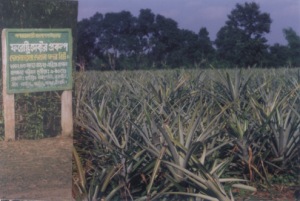
9466 hectare forestlands grabbed illegally in Mymensingh region, says DFO: Deforestation for pineapple, banana cultivation continues
Aminul Islam, Mymensingh
Shal forests in Mymensingh and Tangail districts are disappearing fast because of plunder by thieves and deforestation for pineapple and banana cultivation. There were 1,20,000 hectares of Shal forests in the central plains and north-eastern regions of the country, according to Abdul Latif Mia, Divisional Forest Officer (DFO), Mymensingh Forest Region. The forests have been reduced to 40,590 hectares now -- 15870 in Tangail and 7808 in Mymensingh--, according to a government survey done in 1999 and 2000. The DFO also said that 9466 hectares of forestlands have been grabbed illegally in Mymensingh Region. The disappearance of forestlands is affecting the environment, bio-diversity and livelihood of tribesmen in Mymensingh, Tangail Jamalpur and Natrakona districts, environmentalists and different NGOs say. A government plan is also responsible for disappearance of Shal forests, sources said. The government started plantation of Eucalyptus, Acasia and Menjiam plants in Madhupur Shal forest in Tangail under a programme titled Thana Afforestation and Nursery Development Project (TANDP), funded by the Asian Development Bank (ADB) in 1989. The project was completed in 1995. Later the project area was expended to all four forest ranges in Madhupur and one in Muktagacha forest area in Mymensingh district. Local people including Garo tribesmen had expressed their resentment when the Forest Department had started the programme by cleaning the Shal forests indiscriminately without taking into consideration the severe environmental consequences that would follow, said officials of the Society for Environment and Human Development (SEHD), a local NGO that works on environment. Cleaning of the Shal forests have reduced soil fertility and damaged the environment, they said. Indigenous people are the worst sufferers because the Shal forests used to provide them with food and shelter. "Shal forests provided us with food and shelter and other requirements for ages. But now the situation has changed totally, keeping us in great difficulties", said Rana Chisim, a student of Madhupur Degree College. Elderly Benedict Mangsung at Aronkhola village in Madhupur said that during British rule, indigenous people would take lease of forest lands for "Jhom" cultivation and return the lands to the authorities after planting Shal trees to create new forests. The forests were created by local people in this way. Other valuable timber trees such as Koroi, Chambal, Jogini Chakra and Kaikha were also raised. During a recent visit by this correspondent, some local people at Aamlitala village in Madhupur forest area expressed their deep sorrow over the fast disappearance of Shal forests. Subash Norkerk, a student of Government Ananda Mohan College in Mymensingh town said that there is no need for afforestation in Shal forest areas if steps are taken to protect the Shal trees. This will also protect the bio-diversity and ecological balance, he said. DFO Abdul Latif Miah however said they have started planting saplings of Gamar, Sal, Garai, Aurjun, Telsur and Akashmoni in forest area, which are not harmful for environment. He also said pineapple and banana cultivation has no bad effect on forests. The government's Social Forestry Project has benefited local people. On pilferage of timber trees, he said this is due to shortage of forest guards, employees and vehicles of the Forest Department. But illegal felling of trees has been reduced over the years, he claimed.
|