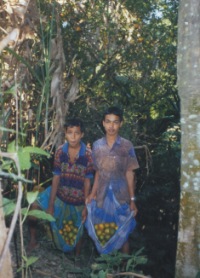
Poor govt response affects orange cultivation
Moulvibazar farmers resent lack of infrastructure: DAE proposal for 5-yr extension of project awaits ministry approval
Rajat Kanti Goswami, Moulvibazar
A dry spell followed by floods badly hit orange production in Moulvibazar district this year, reducing the yield by around 20 per cent over that of the last year, according to estimates by growers and officials.The average annual production is two lakh eighty thousand tonnes in favourable weather, according to District Horticulture Development Officer Anwar Hossain. The average production per acre is 3.5 tonnes. This year, the production was less as flowers withered in a large scale due to uneven rainfall during the fruiting season, he said. It would be around two lakh tonnes. Farmers depend on nature as there is no irrigation facility in gardens. There is bright prospect for increasing the yield and expanding its cultivation in Moulvibazar but the potential can not be utilised due to lack of government's proper attention, it was gathered from agriculture officials and farmers. The government's lukewarm response to growers' demands for development of irrigation and infrastructure facilities has frustrated farmers, many of them said talking to this correspondent during a recent visit to the orange growing areas in Kulaura and Baralekha. The government's Orange and Pineapple Development Project (OPDP) taken up in 2002 concludes in June next year. Responding to growers' demanded, the Department of Agriculture Extension (DAE) has submitted a proposal to the ministry for a five-year extension of the project. It now awaits the ministry approval, officials concerned said. The growers said the short three-day training under the project benefits them. They are trained on how to raise a garden, use of fertiliser and pesticide and production of saplings. But the project lacks plan to develop infrastructure and irrigation facilities, which are vital to increase production. There is nothing in the project to develop the communication system, the main hurdle in marketing. Growers have to manually carry their products to distant markets from the gardens in the hills, the growers said. So far, 510 growers out of 1200 in the district have bee trained. More 300 will be trained in the coming months, officials said. The project followed publication of a story in The Daily Star on November 12, 2002 on the sorry plight Moulvibazar orange growers and lack of government attention. Moreover there is hassle by law enforcers, many of the growers alleged. Bordering Goalbari and Fultala unions in Kulaura upazila and Shahbajpur and Nijbahadurpur unions in Baralekha upazila are orange growing areas. There are around 1000 gardens in the areas, covering about 90 hectares of land involving over 5000 people. The number of trees vary from 200 to 500 in the gardens and each tree yields 500 to 1200 oranges. According to DAE estimate, there are about 70,000 orange trees in the district. Law enforcers often harass the local growers on their way to markets with orange plucked from their gardens, branding them as smugglers, many of them alleged. Now is the peak season of orange harvest. The main wholesale markets are in Juri and Kulaura. The growers ventilated their grievances at a recent gathering held on the Lathichhara Community Primary School at Kulaura, when over 100 of them from Kulaura and Juri upazilas were given identity cards by the administration to avoid hassle by law enforcers. With these, about 500 growers so far got identity cards. Some farmers got cards last year. The gathering was presided over by Kulaura Upazila Nirbahi Officer (UNO) Md Nurul Absar. Moulvibazar Deputy Commissioner Md Younusur Rahman was the chief guest while DAE Deputy Director Md Abdul Hamid Mullahwas the special guest. District Horticulture Development Officer Anwar Hossain also spoke on the occasion. The DC assured the growers that their problems in growing and marketing of orange would be resolved soon. He urged the people of the two upazilas to bring more lands under orange cultivation, assuring them of all possible DAE support in training and technology. Some orange producers also spoke at the gathering. They said lack of irrigation and transportation facilities are the main problems. These can be resolved only by the government. They expressed their disappointment that the project concludes in next June and demanded its extension. Anwar Hossain said in two years, the project increased the total lands under cultivation to 90 hectares from 69 hectares. He said the number of trees in gardens is less than optimum as farmers plant saplings in a scattered way due to lack of knowledge. Six hundred trees per hectare is the optimum figure, he said. After the training, each farmer was given 10 orange saplings and Tk 360. The OPDP also covers Panchagarh and Chittagong.
|