Strike A Heroic Pose : A Memoir of Camp Life in the Independence War
Kaiser Haq
It was quite by chance that I became an officer in the Bangladesh Army during the independence war. I walked across to Agartala in late May 1971, enjoyed an epic train ride to Calcutta, caught up with friends who had also crossed over, and when I heard that some of them were headed for Sector 7, decided to follow suit. One morning in early June I fetched up at the sector headquarters near Raiganj in Indian West Dinajpur and found that interviews were scheduled for the evening to select officer cadets for the Bangladesh Army. The cadets would be trained and commissioned and sent to the front.My friends and I debated whether to try for the commission; we had come to fight but who wanted to be labelled a professional soldier? Finally we decided to go for the interview after Major Najmul Haq, the sector commander, reassured us that we would be free to leave once the war was over. Lt. Colonel Nuruzzaman turned up in the evening to head the selection board, and asked all the questions. He quizzed me on my intellectual interests, thus giving me an opportunity to descant on Bertrand Russell and the Liar Paradox and the Sartrean sutra "Existence is prior to essence". We'd have to wait a few days for the results of the selection process, though. We'd been allowed to squat in one room in the sector commander's bungalow, but since sector headquarters was moving in a couple of days we repaired to the adjacent Youth Camp. The two youngish men who ran the camp were starved for educated company and readily accorded us VIP status, allotting us a large room that we had all to ourselves. We'd wake to the tramp of drilling feet and make our leisurely way to breakfast. One of our hosts would regale us with his observations on sex, a subject he avidly studied in life as well as letters. Thus he could talk almost in the same breath about Harold Robbins, on whom he was evidently an authority, and about the effect of female pheromones on his libido. Our Youth Camp meals therefore became kinky affairs. Meanwhile the guerilla war went on. We heard about a Mukti Fouj officer who had become a living legend on account of his unconventional, indeed apparently suicidal tactics. Lieutenant Idris Khan had been cashiered from the Pakistan Army (EME Corps) for assaulting a superior officer who had made abusive remarks about Bengalis. He was employed as an engineer at the Joypurhat Sugar Mills when the war broke out. He gathered together a squad of young volunteers and started guerilla operations against the Pakistan Army. As he headed back after one operation he got the news that the Pakistanis had entered Joypurhat, so he led his boys to sanctuary across the border, and continued his operations from there. There was no news of his family. Then, after a month or so he discovered them in a refugee camp. One morning we travelled to Lieutenant Idris's camp. He greeted us warmly as he inspected a ragtag squad that was getting ready to go into Bangladesh on a patrol. He was on the short side, but heavily built. He was known to push his men hard, and to resort to summary tactics that often took the enemy by surprise. Once word reached his ears that a notorious robber who was collaborating with the Pakistanis had made contemptuous remarks about him. Disguised as ordinary villagers, Idris and his men turned up at the robber's hideout. Idris then landed such a powerful slap on the traitor's face that even as he was led away to be executed he commented that it was the hardest slap he had ever tasted. It was getting on to be two weeks since our interview and still there was no news about the results. We decided to go to Calcutta and find out for ourselves. Our Youth Camp hosts were sorry to see us leave, and generously gave us a hundred rupees each out of Camp funds to cover our travel expenses. We turned up at 8 Theatre Road (Shakespeare Sarani), where the Bangladesh government-in-exile was housed, and met Sheikh Kamal. He was one of the selected cadets; so were Dipu (Quayyum Khan) and I, as we happily discovered; and a fresh-faced youth called Alik Gupta, who had come up from a southwestern sector. The four of us had to report at once to a military hospital in Kalyani for our medicals and then head for the training school. If we had waited to hear a few more smutty stories at the Youth Camp we'd have missed the bus. As we were being driven to the railway station after the medicals we passed the scene of a heart-wrenching traffic accident. A small child had been knocked down and lay as if asleep, but with his skull dislodged and upturned like a bowl. We took the train to Siliguri, then transferred to a branch line and got off at a tiny station called New Mal, snuggling against a hill. The narrow station platform became the scene of a back-slappingly joyous reunion. There was Samad Bhai, two years my senior at St. Gregory's, and half a dozen old friends I knew from my two years at Faujdarhat Cadet College. An Indian Army truck conveyed us through winding hill roads to Murti, a sprawling military camp that had been converted into a Mukti Fouj training centre. The larger part of the camp was occupied by hundreds of guerilla trainees, who were put through an intensive two-week course before they were sent to their respective Mukti Fouj sectors. At the other end was our officers' training school, which was very different from anything I could have imagined. It comprised a couple of bamboo barracks in which sixty-one of us cadets would make our home for fifteen weeks; we'd be joined later by three more who had defected from the Pakistan Military Academy. We were issued with bedding and civilian apparels of antediluvian design: cheap coloured cotton shirts that buttoned only halfway down, billowed out below and had side pockets like kurtas; shorts that were long and flappy-loose. At lights out we spread the bedding on the bare cement floor, turned down the flame of the hurricane lanterns and slept like babies. In time we were kitted out more appropriately, in khaki dungarees for instance; and bamboo cots were provided, a dubious improvement, for the things were flimsy and the bamboo splints could pinch the skin of the unwary. Our day began at false dawn, when we queued up for half-pint mugs of sweet, milky tea, then filled up empty beer bottles with water from drums and headed for the row of trench latrines across a broad field. PT followed, then breakfast of puri-bhaji and more tea. We would change into dungarees and go to get our rifles for military drill and weapons training. In between there were lectures on tactics. In the afternoon we had games, and night exercises a couple of times a week. For several weeks we were always moving on the double. It took its toll; several of us began limping because of strained knees, but there was no respite. On night exercises we slithered and slipped and played battle games amidst bushes, and came back with fattened leeches stuck fast to the skin. And yet, amidst all the rigours there was time for jokes and leg pulling and even a little reading. I had carried with me from home three carefully chosen books: an anthology of modern poetry edited by John Wain, a book called "The Age of the Guerilla" and the 1964 edition of the Concise Oxford Dictionary, which, rain-stained from the war, is still a prized possession. On College Street, Calcutta I picked up from a pavement bookseller a Penguin anthology of World War II writings and a 1933 issue of an English poetry magazine. From two course-mates I borrowed and read "Love Story" and "Dr Zhivago". Another that came my way and gave me an inkling of the way the war would end was Moshe Dayan's memoir of the 1967 Arab-Israeli conflict. It had been given by our Chief Instructor, Major Thapa, to my course-mate Sayeed (now Major General), who had been appointed wing leader and was evidently being groomed for the cane (the C-in-C's cane, that is, which is the equivalent of the sword of honour in short courses). Major Thapa asked Sayeed to give an oral report on the book. Sayeed felt he couldn't make time to read it properly and asked me to go through it and make a digest. This I gladly did. The essential point of military interest in the book is the strategy of bypassing some enemy defences in order to strike at other more important ones whose loss would bring the enemy to their knees. I told my friends that this was the strategy that the Indians would use when they got into the fray, which I surmised would be in winter when they could safely withdraw units from the Chinese frontier. Events would bear me out. We were a motley crowd, which was only to be expected in an unconventional war. Most of us were students when the crunch came; a few had started working, but a couple of us came from the armed forces: Amin, who came from the education corps in the Pakistan Army and after being commissioned fought alongside me in Hamzapur sub-sector of Sector 7 under Captain Idris (yes, the same Idris, mentioned earlier), and Awal Choudhury, who came from EPR Signals, equipped with a "hold-all", mosquito net, "bodna", a Bengali-English dictionary and certain foibles that added enormously to the comedy of camp life. Awal used his dictionary to compose piquant sentences for special circumstances. Thus when Dipu was ragging him about his "bodna" or something he retorted, "Mr Dipu, you are not only rotten but also pungent." On another occasion, when we were served an "improved diet" he commented: "The nomenclature of this food is good." As if this wasn't enough, he also composed verses in English, sometimes extempore. When we told our squad commander Captain Sajjan Singh about this foible of his, he was ordered to recite something. Unperturbed, Awal rose, stood facing the squad and intoned: What a thunder! Yahya has committed a blunder! Now he will wonder. O brave Mukti Fouj, Strike a heroic pose…. The rest, alas, slips my memory, but it did go on for a bit. But Awal had pithy two-liners as well. "You must study art," he recited once, "To learn about the human heart." And one morning Dipu overheard him in the latrine, commenting after some unsuccessful straining: "It is tight!" A pause followed, then happier sounds, a sigh of relief, and: "Now it is right!" There was little else by way of recreation, but as the weeks passed we managed to save a little from our modest pocket money and slip off now and then to a nearby bazaar to get plastered on rum. The monsoon ended and the fields became dry and firm. Once on night exercise we ran into wild elephants that had come down to graze in the fields of ripe grain along the river behind our camp. The commandant, Colonel Dasgupta (whose family home was originally in Mymensingh), fired a few warning shots above the heads of the giant beasts. Captain Jadav, a sapper, whose favourite locution was to call everyone a joker (even our heroes, if we had any, and our leaders were jokers, only they were bigger jokers than any of us), wryly told his squad: "Only an anti-tank mine can stop an elephant. We don't have any with us, so you jokers had better run and get on the high ground behind us before the elephants decide to charge." The elephants didn't charge after all and before we could have further encounters we had all qualified for our commissions and proudly marched to our passing-out parade. It was attended by the cabinet-in-exile and Colonel Osmani, whose rococo moustache and Sandhurst accent had the desired effect on all the Indian officers. "He can't be a colonel," they said. "He should be a general." And so he did become before long. And we were now second lieutenants who had a war to fight. Within days we got our travel orders and were on our way. The rest of the story has to be saved for another day as the literary editor won't give me any more space in this issue. Kaiser Huq teaches English at Dhaka University.
|
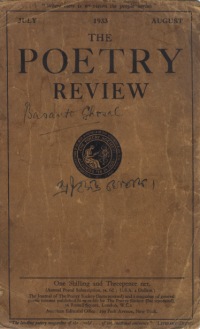
Poetry for the Mukti fighter |

