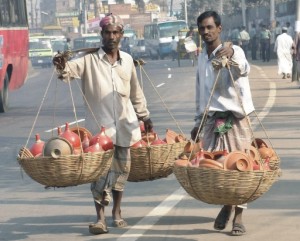
Buy deshi campaign
A Mahasen, Dhaka
The government (in a developing country which is changing fast) is too distracted with political issues and tides, and its policies are mostly short, interim or ad hoc.In a noisy environment of governance, long-term, background development projects do not get enough time periods for analytical long-term planning, because the governance is stage-managed for political consumption. The focus is on political showmanship, and the front stage is too crowded all the time, while the exercises in the background do not get enough attention for public awareness. One such topic is the lack of propaganda and publicity technique to wean away the nouveau rich from the craze of buying foreign goods when equally good quality local products are available. There is an urgent need to start an awareness programme to patronise local products, staring with the items we export. Today we see that the shops are overflowing with display of foreign good. Even ready-made garment is seen with imported labels and brand names, whereas we export world-class RMG to the US and other zones, and earn 74 percent of the total foreign exchange. Even second-hand clothes are imported, when brand new factory-rejects are available cheap on the footpaths. Even quality local goods are not purchased by the rich-shoppers. The false-label culture is prevailing in Dhaka. Lately, handloom fashion is coming vogue. We advise our relatives living abroad to take back from Bangladesh (during visits on home leave) hand-made products, which are highly appreciated in the industrialised countries, as the labour cost per hour is high in countries with high standard of living. We have to publicise our culture and goods abroad (note the popularity of the Bangladeshi restaurants in UK, which has changed the eating habits of the English). We are suffering from a peculiar syndrome of inferiority complex, which is induced by the newly rich families. Some of my local acquaintances avoid going into the air-conditioned shops, and buy most of their requirements for the footpath hawkers and mall hops Another tendency is that the shops only stock fast selling items, giving no choice to the customers. The publicity culture is weak, and the SMEs cannot afford the publicity campaigns. The government may encourage some NGOs to pay attention to these awareness campaigns, in collaboration with the chambers of commerce. There are few buyers for quality surplus goods in the market, specially coming for the cottage and small industries. in fact the whole rural marketing chain is weal, due to the inability of the various cooperative chains to work honestly. This is not surprising, as our political culture is passing through the same trauma, and the political masters are never at ease, to display their originality in entrepreneurship in fields outside politics. Note the collapse of our jute and sugar industries. The garment workers work under pathetic conditions; the Anti-Corruption Commission and BTRC cannot take off (DS Feb 8); the free-meter culture in the public transport sector is not operating at all. The thousands of NGO offices cannot be driven from the residential areas to the multi-storied shopping complexes (the upper floors), where enough office space is available. Many public services have been personalised or oriented into cartels. What is the overall systems loss in the civil services? The list of shortcomings are long, and the patience of the political regimes are short and transient. The political confrontations produce negative outputs like hartal. How to generate public service without remaining in power all the time? The problem is where to start?
|