Bangladesh one of top 10 markets for StanChart
Osman Morad tells The Daily Star
Star Report
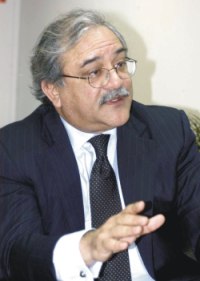
Chief Executive Officer of Standard Chartered Bank Osman Morad finds a huge scope for development of banking business in Bangladesh."Bangladesh offers enormous opportunity for banking both in wholesale and retail levels," Osman told The Daily Star in a recent interview. "At the wholesale level, development of the debt capital market offers ample opportunities. Project finance and bond market could be explored as banks in Bangladesh have limits to how much they can lend to a borrower due to their narrow capital base. So, this leaves the room for exploring new avenues for financing." Osman, who has a vast experience of working in the Middle East, also felt that financing of the small and medium enterprises (SMEs) has not been addressed in a disciplined business way, adding that Standard Chartered has been financing the SMEs reaping turnover up to $3 million. "We engage in programme lending for the SMEs," he said. "We look at other programmes taken elsewhere in world and shape it here. We are also going to trade-finance the SMEs." Osman also sees growth areas in credit card and consumer banking and wants to improve cash management products so that customers can generate transfers of funds from offices. However, Osman feels that foreign banks should be allowed to set up more branches to facilitate better service to customers. Talking about the efforts of Standard Chartered to improve service quality, the CEO said a project called Outserve is being implemented here, which analyses a particular complete management process on the basis of customer complaints to find out what actions could be taken to reduce such complaints. "We have to embed service culture in our staff. That is the biggest challenge of any management team and that is my personal challenge too," said Osman. He also said Bangladesh should be more flexible in allowing expatriates in the banking sector. "We are exporting people to our network from Bangladesh, but we cannot bring in people from outside because of a limit on foreign national working in banks," he elaborated. "If we could import manpower that would have helped develop best practices and Bangladesh banking sector would have benefited." Explaining the strength Standard Chartered enjoys in Bangladesh, Osman said diversified products, scale of investment allowing it to accommodate large loans, excellent human resources and strong social commitments are some of the elements that make the bank an excellent one. With operations for over a hundred years in Bangladesh, the bank has also gained a vast knowledge about the local demands, said Osman. Standard Chartered considers Bangladesh a key country in its banking network. Not only that, Bangladesh figures as one of the top 10 most valuable markets in the world for the bank because of what Osman said is its strong growth over the years. "We have a substantial piece of market share here and the market is growing at 5-6 percent a year without even trying," he said. "It is a very complex market because it is going through a phase of deregulation and we have to innovate new products taking the changes into consideration." Talking about the complexities of the market, he said: "In Bangladesh, companies do not have the kind of financial reports as in the developed countries because not that many companies are listed on the stock market. So, they do not have annual reports or the kind of financial disclosures. This is why bankers have to know their clients very intimately. This is a challenge in Bangladesh." "But just as every challenge has its opportunities, knowing customers closely has other rewards in terms of loyalty and better and advanced information on clients," he observed. "We do not compromise on credit quality, service quality and environmental standards," he stressed. "We customise our global products with local addendum." When asked to comment on the recent controversy over an internal memo of the bank about Bangladesh economy, Osman said it was caused because of some irresponsible language used in the memo. "The memo was not fact-based," he said. "Our official view is that Bangladesh economy is strong. Foreign exchange reserves now stand at an attractive level and are sufficient to support import needs. The memo also mentioned that we are doing a lot of business here and that we are planning to do more business," said the Standard Chartered CEO.
|