Dietary vitamin B3 intake can prevent Pellagra
Tareq Salahuddin
Pellagra is a multiple-deficiency disease associated with diets providing low levels of niacin (vitamin B3) and/or tryptophan and often involving other B vitamins resulting in changes in the skin, gastrointestinal tract, and nervous system. The characteristic manifestations appear as dermatitis, diarrhoea and dementia and can lead to death.Symptoms
Loss of weight, strength, and appetite precede the appearance of any diagnostic dermal lesions. During this early stage, ill-defined disturbances of the alimentary tract, including indigestion, "dyspepsia", diarrhoea or constipation, as well as weakness, lassitude, irritability and distractability develop without obvious reason. Skin lesions: The dermatological changes are usually the most prominent symptom. The lesion starts with erythema (redness of skin) resembling sunburn, which is symmetrically distributed on the parts of the body exposed to direct sunlight—the backs of the hands and forearms up to the rim of the sleeves, the feet and legs up to the edge of the trousers or skirt, the forehead, and on the nose and cheeks in a butterfly distribution. The front side of the upper part of the neck shadowed by the chin escapes, but the lower part of the neck and the upper part of the chest are affected according to the width and shape of the neck of the shirt. Gastrointestinal lesions: Pellagra patients usually complain of nausea, excessive salivation, a burning sensation in the epigastrium (pit of the stomach, the part of the upper abdomen between the ribcage and the navel), and diarrhoea. The mouth is sore and the tongue is brilliant or beef red in colour and swollen. Cheilosis (swelling and cracks on the lips and corners of the mouth) and angular stomatitis (inflammation of the inside of the mouth) are seen in niacin deficiency. Nervous lesions: Early neurological symptoms associated with pellagra include anxiety, depression, and fatigue; later symptoms include apathy, headache, dizziness, irritability and tremors. In early cases the manifestations are psycho-neurotic; later, lesions affect the nerves. Treatment
The administration of niacin has a dramatic curative impact on pellagra. The daily recommended dose is 300 mg of nicotinamide in divided doses, and treatment should continue for 3–4 weeks. But treatment should be followed under a registered physician. Acute inflammation of the tongue and mouth, as well as diarrhoea, subside in a few days. The dementia and dermatitis usually improve significantly within the first week of therapy. In chronic cases, a longer recovery period is required, but appetite and general physical health improve rapidly. It is also recommended to administer a vitamin B complex preparation or a yeast product since patients with pellagra very often have a deficiency of other B vitamin compounds. Prevention by dietary intake of vitamin B3
Niacin is widely distributed in plant and animal foods. Good sources are bakers' yeast and meats (including liver), cereals, legumes and seeds but significant amounts are also found in many other foods such as milk, green leafy vegetables, and fish, as well as coffee and tea. The nutritional adequacy of diets with respect to niacin involves not only the level of the preformed vitamin, but also that of the essential amino acid, tryptophan. A substantial amount of niacin can be synthesised from tryptophan. Milk and rice both have proteins with a higher tryptophan content than maize, and the niacin present is in a more bioavailable form.
|
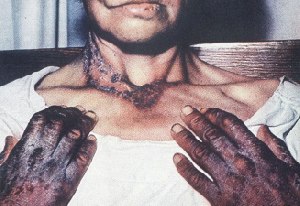
A typical patient of pellagra affecting skin, gastrointestinal and nervous system which could be prevented by dietary vitamin B3. |

