BookReview
Thrice in Delhi
Mahera Zaman
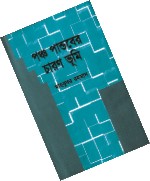
Pancho Pandober Charon Bhumi by Mahbubur Rahman; Hakkani Publishers, Dhaka, 2005; 104 pp.; Taka 100This second book by Mahbubar Rahman, a collection of personal reminiscences, is set in the ancient city of Delhi. The author had spent some childhood years in Delhi and each piece vibrates with the nuances of the place. So why is Delhi termed the 'charon bhumi' (place of action) of the Pandavas, the heroes of the Mahabharata? After all, the Mughals, Pathans, Afghans and others had no less a claim to Delhi. The choice seems to be idiosyncraticthe writer was inspired by the name of the college Indraprastha opposite his school at Alipore Road. And perhaps he wanted to draw an analogy with the deeds of the Pandavas, a kind of mock epic in the shadow of Alexander Pope. The nine pieces of this anthology reflect three phases of the writer's life. First he walks down memory lane to his childhood and schooldays in Delhi--reminiscences of boyish pranks, of bullies and compatriots, of school teachers both feared and loved, birds and animals, of juvenile adventures and illnesses. The second involves his re-visit to the 'forbidden land' just after Bangladesh emerged as an independent state, when the writer along with his wife and two small children were Bangalis stranded in Pakistan, and escaped to Bangladesh through Afghanistan and India. The third phase is primarily about his medical treatment there, where a humourous style enlivens for us modern Delhi and its mix of cosmopolitan and traditional life. Interspersed in all the above is also a chronicle of history that unfolded as British rule was drawing to a close in India, unleashing a new political power struggle. So even though most of the material here is autobiographical in nature, Mahbubur Rahman has skillfully avoided the monotony of a personal chronology by embedding himself on a larger canvas that of the partition of India as the British Raj came to an end or of the period of the liberation of Bangladesh or in the context of Delhi today. Mahbubar Rahman's mastery of the Bangla language is enviable. At times, he could have used simpler language but perhaps that would not be his style at all. So let him write on in his own inimitable style. His readers would welcome another anthology. Mahera Zaman is a teacher.
|
|

