In conversation
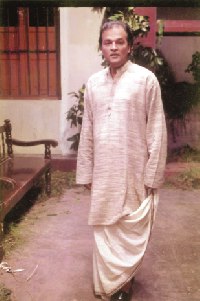
Shobuj: An actor turned playwright
Ershad Kamol
For quite sometime pioneer theatre activist Khairul Alam Shobuj has been absent from theatre. Now he is spending busy hours in TV plays. He is acting in three mega-serials, Mohona, Bioscope and Akash Bhora Megh, which have been aired on different channels. Shobuj is currently dramatising and writing a script for Nazrul's birth anniversary based on the story Mehernigar for BTV. Besides that he has been a regular performer in radio plays.Talking about his work, Shobuj says, "So far I have translated and adapted foreign plays for staging, but I have never written an original stage play. I am trying to develop myself as an original stage playwright. Moreover, I think an artiste should perform in all the mediums. That is why I am performing in TV and radio plays. At present three mega serials have been aired. But, within a short time I will make a comeback on stage." The neo-theatre trend was introduced in Bangladesh after the Independence and Shobuj is one of the key personalities of those days. "Before our Liberation there were a few theatre troupes in the country," he says, adding, "Full fledged theatre activities were introduced in Bangladesh on the heels of the formation of the student-based theatre group Natyachakra in 1972." Natychakra was a Dhaka University Central Students Union (DUCSU)-based organisation and Shobuj was the founder general secretary of the troupe. After completion of his studies, Shobuj along with other members of Natychakra formed Dhaka Theatre. And then he moved to another theatrical group Theatre. Shobuj says, " Initially I only did the organisational work. After working many years with Theatre, I along with my comrades formed another troupe Theatre (Topkhana)." Amplifying on his experience with theatre, Shobuj says, "I appeared in every production of Theatre till the division of the group. I really enjoyed performing in Antigone, which was also translated and directed by me. Moreover, I have translated Henrik Ibsen's Doll's House and Wild Duck, Rose Marshall's Enemy of People, Anton Chekhov's Sea-gull, Harold Pinter's The Dumb Waiter and a few others." Shobuj is far from happy with the current division of big theatre groups in the country. Shobuj says, "Treachery is unacceptable in art. There can be a productive competition among the artistes, but backbiting and jealousy should be taboo. A negative trend on this front is the main cause of the division of theatre troupes in Bangladesh." Commenting on the quality of the young artistes, Shobuj is of the opinion that many of them have the potential and they should be encouraged. In Shobuj's words, "After the successful introduction of the neo-theatre movement, the young artistes of today have a greater scope to develop their potential. They should not go after shortcuts." Khairul Alam Shobuj has also written 20 TV plays. Of those Gift, Atyaja, Shinri, Neel Kantha Pakhi and Ekti Kabita Atyahanoner Aage were well received by the audience. All of these plays were single episode works. On the current mega-serial trend, Shobuj says, "In most of the cases the approach of the artistes is commercial rather than professional. As a result, there has been an increase in quantity of the serials but very few of these are quality productions. However, there are many young talented artistes in the industry and it would be better if the makers make novel-based mega-serials. In that case there would be a story line. Moreover, all the classics can be presented to the audience." "I do not like the usage of colloquial language in the mega-serials. This kind of experimental work has been done earlier by many. However its lifespan is very short," concludes Shobuj.
|
|

