World Day Against Child Labour
Ending child labour
Lamia Rashid
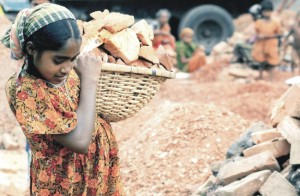
Child labour is a most pressing problem for millions of children and families in Bangladesh and one which demands the immediate attention of the Prime Minister and national policy makers. There are about seven million children in the country who are "economically active," according to the 2002-2003 Bangladesh Bureau of Statistics Child Labour Survey. This figure is likely a conservative estimate, particularly given the many girls and boys who were not counted because they do not get paid for their work. Of the "economically active," over three million children, again a likely underestimation, are categorised as "child labourers" because the work they do is harmful to their physical, mental, or moral development, in that they are too young or work too many hours according to internationally agreed standards and conventions. Save the Children (SC), a child rights organisation which supports children's active participation in decisions that affect their lives, has asked children all over the country, over the course of several years, how they would define harmful work. Children have said that if they have to work long hours so that they cannot attend school, that work is harmful. If they don't get paid for their work, or if wages are paid irregularly or promised and not paid, that work is harmful and exploitative. If employers subject children to physical and verbal abuse in the workplace, the work is harmful. And finally if work is dangerous and leads to illness in the short and long-term, the work is harmful. These views of children call for the government to take a leadership role in protecting these millions of children and standing at the forefront of changing social norms that perpetuate the practice of involving children in harmful work. For example, in rural and urban areas alike, child domestic workers, many of whom are girls, are sent to work in the houses of wealthier families. They are often not allowed to attend school, instead they are asked to make preparations for the employers' children to attend school. They are on-call from dawn to late hours at night, often asked to do tasks which they are physically or mentally unable to grasp. They are routinely subject to verbal, physical, and even sexual abuse by employers. And they are paid a pittance, if anything at all. Boys, particularly in rural areas, are sent, sometimes with fathers and sometimes alone, to do agriculture work or any other available work. If they are with fathers, they receive no wage at all. If fathers are poor, they save on the cost of hiring in agricultural labour by engaging their sons, even if it means that the child is unable to attend school. In rural areas, boys are often involved in the heavy work of rickshaw-pulling from as early as age ten and in urban or peri-urban areas, in heavy and dangerous factory based work using ancient technologies. While several multi-million dollar projects in the country have targeted child labourers in a select few occupations, these have been able to protect some thousands of children. If we make a very rough under-estimate that, following the approach of these projects, every $10 million spent has protected fifty thousand children from harmful work, it would take $600 million to protect the current three million child labourers. Therefore, government must look to urgently attack the root causes of child labour. In education, the government must address the poor quality of education which makes work a better option for many children to gain future livelihood skills. To do this, the education allocation in the national budget must focus on improving education quality. This would require that the very important cash for education programmes, which make up a large part of the education budget, receive allocation from other budgets, such as social security and welfare, in order to sustain the gains in enrollment and extend coverage to reach all poor primary school-aged children in rural and urban areas. The government must provide adequate social protection for families who are otherwise forced by poverty to depend on child labour, such as education stipends for the poorest children. The poorest parents and guardians must also have access to asset transfer and financial services programmes to cope with disasters and under- and unemployment and be able to invest in income earning activities. Finally, the government must provide support to the vast numbers of domestic producers, many of whom are in the "informal" sector, to provide safe working conditions for those children who are not barred from working under internationally agreed conventions. This kind of attack on the root causes of child labour will require a multi-sectoral framework driven from the top-level in government. Policy makers must urgently put into place a comprehensive Child Labour Policy to protect children and prevent child labour. The government must make the necessary investments to turn policy into practice and implement activities directly and in coordination with other stakeholders, from local communities, district administrations, the business sectors, NGOs, schools, as well as parents and children themselves, to reduce the harm caused by child labour. Making these investments today will not only bring immediate benefits for children, but will also have long lasting impacts for the future of Bangladesh as a thriving economy and caring society. Lamia Rashid is currently Head of the Poverty and Working Children Programme of Save the Children UK in Bangladesh.
|