Diversification of agricultural products
Meeting the evolving demands
Md Sayeed Hossain
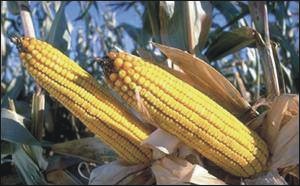
Diversification of agricultural products has become imperative to meet the increasing demand for food and also to keep pace with the changing food habits particularly among the urban people where fast foods are growing popular. The main ingredients of fast foods are potato and chicken. Rice, the staple food of the country lags behind the increasing demands due to population boom. The country produced 2.75 crore metric tonnes of food during 2004 with the deficit of 30/40 lac tonne. So diversification has become imperative to bridge down the demand-supply gap. Besides, to ensure nutrition and balanced diet for the people food diversification is inevitable. Diversified agricultural products may add more value by way of export. But the success of this diversification will depend on the effective integration of agriculture to industry. Industrialisation is the mother of development and if the agriculture could be effectively integrated to industry then the real development will take place. The much-talked about issue of the country is that our RMG sector is under threat due to withdrawal of quota as per WTO agreement. But at the same time withdrawal of subsidy on agriculture by the developed nations as conceded in WTO meeting held in Switzerland from 28-07-04 to 01-08-04 may create ample opportunity for export of our agricultural products. Besides, we have competitive edge on agricultural products, as our land is very much fertile and labour is comparatively cheaper. However, we may apparently take into consideration the potentiality of few items such as potato, maize, cotton, pulse, onion/garlic, vegetables, date juice, coconut, tomato, pine apple, guava, fish etc and other products along with paddy and wheat which are discussed in brief considering their prospect and potentiality: Potato: Potato has huge demands for its diversified usage. It grows almost all over the country but in some areas, the lands are most suitable for potato cultivation with competitive edge over other crops. In 2004 the country produced 40lac metric tonnes of potato. Processed potato has better export prospect with more value addition. It may be noted that in EU and US chain stores such as Macdonald, KFC and others largely use potato. Our policy makers as well as the prospective entrepreneurs should come up for tapping the export potentialities of potato in overseas countries. Maize: Couple of decades back people in this region was not habituated to eat wheat. But now the scenario is completely changed and wheat has now become the second staple food after rice. Similarly, demand for maize is growing day by day and also getting popularity and importance due to its variety of usage. Beyond human consumption, maize is the main ingredient of poultry feed. But maize is mostly imported to meet such huge demand. As per the information of Agriculture Directorate there is an annual demand for 10 tonnes of maize of which the poultry sector alone needs 9 tonnes but the country produces only 3 tonnes. Production of maize is more profitable due to its low cost of Tk 4.00 against sale price of Tk 8.50 per KG. To save the hard earned foreign currency production of maize in a large scale has become imperative. Cotton: The RMG sector of Bangladesh is in the realm of stiff competition in a quota free regime where the inherent advantage/protection of Quota is withdrawn from January 2005 making the prospect of our RMG export very challenging. One thing is crystal clear that to make our RMG export competitive under WTO, development of backward linkage industries is a must. But such development will largely depend on the availability of indigenous raw materials i.e. cotton. If we look at the success story of industrial development in China, India and Pakistan definitely their textile sector would be in the focal point, which happened due to the indigenous production of cotton. Hence, for the growth/survival of our RMG sector in the long run, cultivation of cotton has now become imperative for which the authorities concerned should take the lead. Vegetables: In Middle East and other countries where Bangladeshi people are working as wage earners there is good prospect for export of vegetables, white fish, dry fish, biscuits, chanachur, sweets, pickle etc. As per EPB 48 kinds of vegetables and fruits are exported to 15 countries but the volume is even below 10 percent of their requirement. India, Ceylon, Kenya, Egypt, Thailand, Mexico, Brazil are the main exporters of vegetables. As per the recent study of the Agro-based Industries and Technology Development Project (ATDP), around 0.4 million Bangladeshis are working only in the United Arab Emirate's having the potentiality of export market for USD 3.40 billion where Bangladesh annually exports only worth USD 0.02 billion. Similarly, in Japan there is a big market of USD3,000 million for vegetables. It is evident that in many countries the price of vegetable is at par with fish or meat. In this context, BRAC model may be followed which has achieved good success in the export of vegetables to 10/12 countries. They also obtained European Retail Parties Good Agriculture Practice (EUREPGAP) certificate first in Bangladesh. Without this certificate vegetables cannot be exported to EU. But for export of vegetables from Bangladesh the main hindrance is the non-availability of cargo space for airfreight. The authorities concerned may take the initiative right at the moment. Spices: For import of pulse, onion/garlic, mastered seeds and other spices the country spends about Tk10,000 crore but in the past we had abundant production of those items in the country. Lands of certain areas are quite suitable for such crops viz the greater districts of Jessore, Kushtia Faridpur, Pabna etc. As per Bureau of Statistics, annual requirement of onion is 4/5 tonnes but the indigenous production is only 1.5 tonnes leaving the deficit of 3.5 tonnes. Betel leaf: Betel leaf is also one of the cash crops having enough export potentiality to Saudi Arabia, Pakistan, and UK etc. The export market may also be extended to other Middle East countries, US, Australia, Malaysia, Singapore etc. In KSA each betel leaf is sold for REAL 0.50, in UK pound 0.25, for USD 0.50 in US, EURO 0.50 in EU and Rupees 2 in Pakistan. Bangladesh annually exports betel leaves worth Tk1.00 to 1.50 billion to Saudi Arabia, other Middle East countries and Pakistan which may be substantially increased due to the inherent advantages as it grows abundantly almost all over the country. Keeping in view the inherent advantages, jute plants may be used for production of paper. Though efforts were being made earlier but desired result could not be achieved due to lack of technological advancement. Hence, technological adjustment/innovation is needed right at the moment for tapping the potentiality. However, it is learnt that the government is contemplating to import suitable machines to make the project a success. Food processing: Processed foods such as tomato ketchup, jam/jelly from guava, pineapple and banana product have huge export prospect because of the inherent advantages of price competitiveness. Tomato and many other vegetables may be produced round the year if research and development work is undertaken by the concerned agriculture department. There is no denying the fact that without revolution in agriculture it is not possible to create revolution in industry. This actually helps increase income of the cultivators, which in turn will create savings and also raise consumption. Bhutan being a small country availed of the opportunity of its inherent advantage of huge production of orange/apple and other fruits. The jam, jelly, juice of orange/ apple of Bhutan are highly marketable in many countries of the world including Bangladesh. But unfortunately we cannot process our huge quantity of seasonal fruits. The authorities concerned should find out the impediments and also come up with immediate solutions. Government should give priority to establishment of agro-based industry in EPZ. Incentive may also be given to those industries. Date juice: Date juice is a very tasty drink. Foods prepared with date juice are also very much delicious and popular. Date juice can be bottled for marketing with some preservative or alcohol may be produced from date juice for export. Once such market is created there should be simply a revolution in this sector. Date trees are abundantly grown in the grater districts of Jessore, Khulna, Kushtia, Faridpur, Rajshahi. Similarly palm juice can be marketed. However, for integration of agriculture to industry, investment friendly environment to attract foreign direct investment as well as local investment should be ensured, where obviously the government and other related agencies should take the lead. There is no denying the fact that effective marketing has now become imperative for successful launching of any product and this needs to be addressed with top most priority. Evidently the present market is largely "Buyers' Market". Private entrepreneurs should come up to establish export houses for marketing indigenous products in different countries. Our Embassy people in different countries may take the lead to promote our export as a part of country's economic diplomacy and may contribute substantially towards tapping the potentialities. Reputation of exporters as well as of the country is the hallmark and the most decisive factor to earn the confidence of foreign buyers. The authorities concerned and related agencies as well as the business community should ensure fairness in deals. Md Sayeed Hossain is Senior Vice President, Mercantile Bank Limited. (export@mblbd.com)
|
|

