Up close
Shahiduzzaman Selim on the evolution of TV plays
Karim Waheed
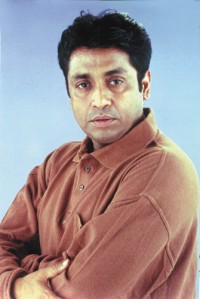
Shahiduzzaman Selim's horizons are not limited to acting in TV plays. One of the leading men on the small screen, he has also been involved with theatre since the early '80s. He is the founding member of Jahangirnagar Theatre. In 1983 he joined Dhaka Theatre and his breakthrough performance on stage was in Haath Hodai, a play in Noakhali dialect. He was enlisted in BTV in December 1989. Since then, through about 400 TV plays, including Jonaki Joley, Granthikgon Kohey, Kothao Keu Nei and Chhaya Shikari, Selim has become one of the most sought after contemporary artistes. There's still more to Selim: he has worked behind the lens and directed TV plays such as the mega serial Sporsher Bairey in the last few years. His works have been well received by both critics and the masses. His latest production Rangchhut is already making waves. So, how did Selim get into direction? According to Selim, "I used to be fascinated by light designs on stage. During the staging of Joiboti Koinnar Mon, I had the opportunity to work with lights for the first time. While working when I had a bird's eye view of the position of actors on the stage, I realised it looked like a perfect shot and that's how it all began." "At the risk of causing outrage, another reason for my entry into direction is that, in my view, there are not enough competent directors around. Surprisingly enough it is mostly the directors of this generation that have earned my respect and influenced me greatly. And why not? If one thinks logically, youngsters nowadays have more access to information than we did. Thanks to DVDs and the internet, this generation has seen or knows so much about movies by remarkable directors worldwide," adds Selim. Has the style and approach to TV plays changed much through the years? Selim says, "TV plays are coming of age dynamically. There was a time when the characters in TV plays always spoke in a loud tone and the style was pretty formal as well. Then there was the use of unnecessary words influenced by the radio plays. For example, in a scene where a character is seen reading, another character walks in and asks, 'What are you doing?' Conscious directors are eliminating this imbecility now. Besides, the use of lights, realistic set designs and even the style of acting are changing. "We don't speak uniformly everywhere. When we're at work, we tend to use formal language. At home and with friends we speak differently, often using different dialects. We are only loud when we are excited or having heated arguments. In the current TV plays, these traits are becoming noticeable. The audience is exposed to the global culture now and they want the real thing. They will not settle for substandard productions that feature appallingly fake looking sets and hams who consider it acceptable to deliver dialogues in a loud, monotonous tone in every scene." Selim feels that the metamorphosis towards more realistic TV plays is a slow process. As he asserts, BTV still churns out poorly made plays, since quite a few of the technicians and producers are not knowledgeable enough. He explains that the decisive factor for getting promoted in BTV, a government organisation, is often the length of a certain individual's career and not his/her competence. "We all need to adapt to the positive social and cultural changes. Since art imitates life, our TV plays should always reflect the contemporary reality," concludes Selim.
|
|

