All Time Greats
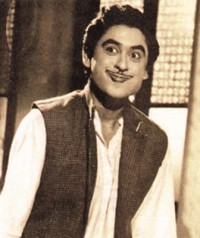
Kishore Kumar: The singing comic actor
According to psychologists, creative people are distinguished by their hypersensitivity to life and their unique knack of interpreting that reality for others. Take the film artistes who conjure up a world of fantasy and light up millions of lives. One such person was the late actor-director Kishore Kumar, who enthralled many cinegoers with his melodious voice and comic acts. He introduced yodelling in Hindi film songs, a feat that propelled his popularity to a zenith as a playback singer. To Kishore also goes the credit of bringing respectability to the comic actor's role. He was equally notorious for his eccentricity. At 18, Kishore started out as a singer despite not knowing even the basics of music. Abhas Kumar Ganguly changed his name to Kishore Kumar, left his native Khandwa and came to join Bombay Talkies where his elder brother (by 19 years), Ashok Kumar aka Dadamoni, reigned supreme at that time. However, Kishore found few opportunities coming his way. He sang his first song, Marne ki duayen kyon mangu for Dev Anand in Ziddi (1948), did bit roles in several films and acted as the main lead in the eminently forgettable Andolan. After his marriage to Ruma Guha Thakurta resulted in a split, Kishore approached music director SD Burman for support. This resulted in his singing the hit song Qasoor aapka in Bahaar. This film marked his journey from being a playback singer in Vyjanthimala's film, to becoming her hero in Ladki (1953). His memorable antics and high spirits were the elements of Ladki's success. Kishore reached his peak as an actor with the zany comedy Chalti ka Naam Gaadi (1958) which starred all the three Ganguly brothers and Madhubala. Kishore and Madhubala were well matched in this comic caper with 'Burman-da' composing such lighthearted ditties as Haal Kaisa Hai Janaab Ka and Paanch Rupaiya Barah Anna. After Kishore's marriage to Ruma ended, he married Madhubala. The two starred in Jhumroo (1961), which Kishore produced and directed. He also composed the music of the film. The riotous Half Ticket (1962) with the two of them saw Kishore at his madcap best. Door Gagan ki Chhaon Main (1964) further confirmed Kishore's acting talent as he scored heavily in a rather serious film. But the 60s were a bit of a slump for Kishore. Beset by tax problems, he was reduced to doing B-films with the likes of Kum Kum. He had the odd singing assignment for Dev Anand in Guide (1965) and Jewel Thief (1967) but that was all. A second coming in his singing career was Aradhana (1969). His songs for Rajesh Khanna - Mere sapnon ki rani and Kora kagaz tha yeh man mera, composed by Burman, proved more popular than Mohammed Rafi's songs for the same film. It was said that he was always difficult. It was tough to get him to come to recordings, but no playback singer took more pains over his songs. He was the first singer to sing not only for his audience but for the star on screen - he could be a Dev Anand, a Rajesh Khanna, a Sanjeev Kumar, an Amitabh Bachchan. He wanted people to keep a distance from him, but his songs brought people close to him. Happy or sad, one wants to listen to Kishore Kumar even to this date. Kishore was notorious for his numerous marriages, After Madhubala, he tied the knot with Yogita Bali which lasted just about a month. Then he married his fourth wife Leena Chandavarkar who was much younger than him. Kishore remained at the pinnacle of success till the very end when he succumbed to a major heart attack in 1987. Compiled by Cultural Correspondent
|