Pain in the Gut
How to keep away from gallstones
People with diabetes are at higher risk for developing gallstones
Tareq Salahuddin
You have a sharp, steady ache in your upper abdomen. It strikes right after you eat. It awakes you up at night. You go to the doctor thinking that you have got a bad case of indigestion. Turns out, you have got gallstones.Many factors can increase your risk of developing this belch-inducing, bloat-causing condition, including obesity, increased estrogen levels caused by pregnancy, hormone replacement therapy (HRT), and birth control pills. You are also more at risk if you are a woman, over the age of 50, if you are experienced rapid weight loss, or if you take the cholesterol-lowering drugs. And people with diabetes are more than twice as likely as the general population to develop gallstones. What are they and where do they come from?
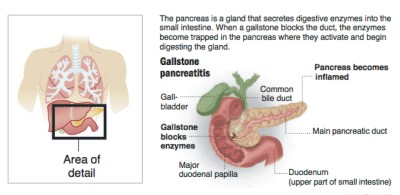
The gallbladder is a small, pear-shaped organ that is found below your liver. It is connected to the liver and small intestine by a series of tube-like structures called duct. The gallbladder's job is to store and concentrate bile, which is a complex fluid that helps aid the digestion and absorption of fats. When we eat, the gallbladder releases this bile through a duct to small intestine to help absorb fat. Gallstones form when substances in the bile, such as cholesterol and bilirubin (the substance that gives bile its pigment), harden into rock-like particles. They can be as small as a grain of sand or as large as a golf ball. There are two types of gallstones -- cholesterol stones, which make up 80 per cent of gallstone cases, and pigment stones, which account for the other 20 per cent. People with diabetes usually have cholesterol stones. “There is a longstanding connection to obesity, but even beyond that there seems to be something about diabetes that contributes to gallstones,” says Byron Hoogwerf, MD, an endocrinologist at the Cleveland Clinic. Hoogwerf thinks that the gallbladders of people with diabetes may not empty out enough bile. The most likely reason for this is autonomic neuropathy (disease involving destruction of the tissues of the autonomic nervous system), but even in case where there is no obvious neuropathy, the gallbladder still may not squeeze out as much as it should. Whatever the reason, people with diabetes should know what gallstones are, what happens when you get them, and how to treat them. Management
Most people with gallstones don’t have symptoms and may never develop any. But sometimes those stones get restless and start moving out. This usually happens after a meal -- particularly one with fatty foods -- when the gallbladder contracts to send bile to the small intestine. If one of the stones gets caught in the duct on the way, this can bring on a period of severe pain. These are called gallbladder attacks. The pain is usually right under the breastbone or a little to the right, but it can also move to between shoulder blades or under the right shoulder. Attacks usually lasts for at least 30 minutes, but they can also go on for hours or even days. You may also have nausea, bloating, indigestion, and excess gas. Repeated attacks or pain that lasts for days may be an indication that the gallbladder is becoming inflamed. People with diabetes are more likely to develop inflammation, which can quickly turn into an infection. If gallstones get lodged in any of the ducts for a long period of time, it can lead to serious inflammation, infection, and damage to the gallbladder, liver or pancreas. It can even be life threatening. Symptoms such as sweating, chills, a low-grade fever, yellowish color in the skin or whites in of the eyes, or clay-coloured stool require immediate attention. Some people only experience gallstones attacks once in a while -- months or even years apart -- and about a third of those who have an attack don’t experience one again. These people are advised to eat a low-fat diet to avoid future attack. For those who have more frequent attacks, and who experience regular pain and nausea, the most common treatment is removal of the gallbladder. Once it is out, the liver compensates by sending bile directly to the small intestine. While some cases require open abdominal surgery, most often the operation can be done laparoscopically. In laparoscopic procedures, the surgeon makes several small incisions (instead of one large one) through which s/he operates, using special small instruments and a camera to view the operating field. There are other treatments for people who routinely suffer form gallstones, such as medications or shock wave therapy, but neither of these treatments is as effective as surgery. Also, if gallbladder is left in place, it is likely that the stones will recur. Prevention
While there is no surefire way to avoid developing gallstones, you can reduce the risk. Maintain a healthy weight. If you diet, make sure not to loose pounds too quickly -- fasting diets and those allowing few calories. Listen to your body. Have any unusual pain checked out. Treating symptomatic gallstones as early as possible greatly reduces the risk of complications.
|