A unique way to stop spread of HIV/AIDS
An NGO gives free treatment to floating sex workers and motivates them in a caring atmosphere in Saidpur town
EAM Asaduzzaman, Nilphamari
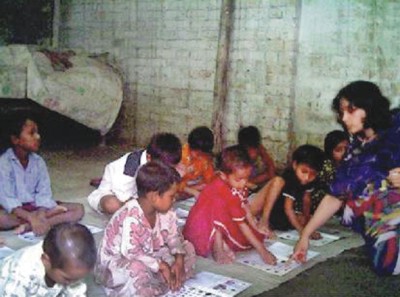
Orphan Shikha (not her real name), a floating sex worker in Saidpur town, was attacked with a sexually transmitted disease (STD). The hapless girl from a poor family had to go for the trade after being cheated by her fiance. One day, one of her associates took her to the 'Drop In Centre' (DIC) in the town, run under an HIV/AIDS Prevention Project, run by the Rangpur Dinajpur Rural Service (RDRS), an NGO. She was surprised. She got treatment and medicine, neat and clean place to sleep, fresh water to bathe and drink all for free. She along with others jointly cooked food for themselves and enjoyed indoor games. They can stay at the centre from 7 am to 5 pm. In the afternoon they come out to look for clients. Shikha is now completely cured from STD diseases and takes protective measures against AIDS, she said while talking to this correspondent on Friday. Free treatment and medicine are provided there to prevent spread of AIDS, but in a different way. The centre was launched jointly by CARE, Bangladesh and RDRS July 2002. Now, RDRS runs it with assistance from Cord Aid of the Netherlands. The manager of the centre, Touhidul Islam, said that being an industrial town, Saidpur has a large number of workers and day labourers. There are several hundred floating sex workers in the town. Being a border town, Saidpur is very much vulnerable to STDs, particularly because these are spreading in the neighbouring country, he said, adding AIDS spreads mostly by floating sex workers. At the center, floating sex workers are treated cordially and made aware of the diseases, he said. Field Supervisor of the centre, Nasima Asmoti, said efforts were made by others in the past to prevent STD diseases and AIDS but those brought no result as the service providers did not try to build a human relationship with the victims. To win their confidence, we have made hygienic and comfortable arrangements for them to stay and have developed a caring relationship with them. As usual, they did not trust anybody earlier as they got hatred and cruel treatment from the society. After coming here, they realised that our efforts to make them aware of HIV/AIDS and STD is for their welfare. So they abide by our advice now. Touhidul Islam said 352 floating girls have been enlisted in the centre. At least 40 of them visit the centre regularly and enjoy the facilities. "We do not interfere in their work". Mousumi Rani Basak, medical officer at this centre, said each girl visiting the centre are more or less attacked with STDs. The diseases will spread like wild fire if these girls are not treated and made to adopt protective measures, she said. After treatment, many of the girls have recovered and others are improving, she said. But things were not as good as now when the project was launched, said Nasima Asmoti. The girls were unwilling to visit the centre as they were frightened by brokers that they would be trafficked abroad or their kidneys and eyes would be taken away. To allay the fear, we trained three of them. They motivated others to come to the centre. This is working well. Nasima said that as the cetre is in a residential area, the local people were very much hostile at the beginning and wanted to evict us. To remove their wrong idea, we arranged meetings with them. Now they are cooperating with us. Liaquat Ali Khan, Senior Programme Coordinator of Rangpur Dinajpur Rural Service (RDRS) said arrangements have also been made for education of the floating girls and their babies. They are also being trained on sewing and embroidery so that they can leave the profession and lead a new life, he said.
|