Talibanisation of Bangladesh
Dr. Abdulla Al-Madani, On e-mail
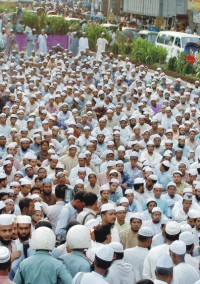
What happened recently should be a wake-up call for Begum Khaleda Zia's government and party. It was good of her to finally recognise that the country was awash with terrorists and extremists and to launch a campaign against them.SAN-Feature Service: What has been a matter of constant denial by the Dhaka government has now come to be proved. The reference here is to the spate of bombings of August 17, which clearly confirmed the existence of al-Qaeda-like minded terrorist groups in Bangladesh. On the morning of August 17, around 500 bombs blasted simultaneously in 60 cities and towns across the country, targeting government buildings, courthouses, public parks, shopping centres, and busy streets. Fingers of accusation are pointed to Jamaat-ul- Mujahideen of Bangladesh (JMB), an outlawed Islamic extremist group, especially with thousands of leaflets in Bengali and Arabic being found at the bombing sites carrying the name of the group. Only those who believe in conspiracy theories and accordingly hold Western, Zionist, or Indian intelligence agencies responsible for any destructive operation have said otherwise. In these two-page leaflets, the JMB demands the setting up of Islamic laws, describes democracy as an anti-Islamic concept that has been introduced by Kafirs (non-believers) and Mushriks (pagans), threatens to Qital (all-out killing), and prescribes severe punishment for the American and British leaders. Since the mid-1990s, there have been many reports warning of Bangladesh's gradual slide towards becoming a new hub of Islamic extremists. This became more obvious after the BNP came to power in 2001 through an alliance with the Jamaat-e-Islami (JEI), a mainstream political party that maintains strong ideological ties with a party bearing the same name in Pakistan and that is sympathetic to al-Qaeda and the deposed Afghan Taliban. The Jamaat and other Islamic parties have employed their partnership with the BNP and position in the ruling coalition government to actively support and give shelter to Muslim extremist groups and individuals, including those who entered Bangladesh illegally from Arab and Asian countries. After all, and regardless of their names and banners, they share one ultimate goal: the replacement of Bangladesh's current democratic multi-party system with a Sharia-based government. Such covert protection of extremist groups has helped the latter become capable of establishing themselves and of launching bomb attacks on public rallies and movie theatres, persecuting the minority Ahmadiyya Muslim community, or oppressing non-Muslim citizens, liberal intellectuals, secular journalists, and members of the opposition Awami League (AL). Prime Minister Begum Khalida Zia's government has remained silent and indifferent, something that can only be explained by Mrs. Zia's intention to appease her Islamist partners and ensure their support for a longer stay in power. In fact, the government has established a tradition of denying international and Western reports concerning Bangladesh, only to reverse its stand and acknowledge such reports under pressure and the fear of international sanctions.
|
. PHOTO: AFP |

