UN Summit
A historic opportunity missed
Syed Muazzem Ali
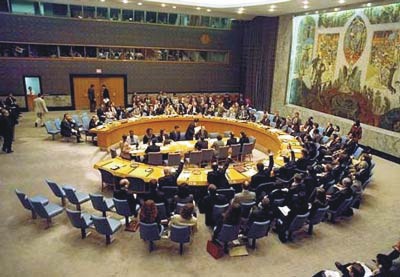
Even before the formal convening of the largest assembly of world leaders in New York last week it was apparent that lack of agreement among the member states would only produce a highly watered down declaration. Six months ago, when Secretary General Kofi Annan had submitted a bold and comprehensive reform package, it was expected that the world leaders would take advantage of the historic sixtieth anniversary Summit to reach agreement on at least the major issues to bring in the much-needed reforms to the United Nations.What was finally achieved at the end of the three-day Summit fell far short of the vision of Kofi Annan for a stronger UN. Why did the Summit fail to reach its lofty goals? Well, all members support reforms but the devil is in the details. The different groups clearly had divergent perceptions about issues of priority in the reform package. Every group pushed for the reform proposals that were of interest to them and opposed those that would weaken their position. The 35-page declaration adopted, by consensus, last Friday only indicates broad agreements on key issues leaving the door wide open for renewed negotiations to work out the details. There was very little statesmanship at the Summit to reach common ground. Developing countries allege that the negotiating atmosphere was vitiated by the newly-appointed United States Permanent Representative John Bolton when he asked for wholesale change of Kofi Annan's original reform package. His long list of unilateral demands only aggravated the existing mistrust among the members from different groups. Subsequently, however, Washington somewhat softened its position but by then members were already engaged in a bitter struggle to retain their own domain of influence. Washington, which enjoys the coveted veto power in the Security Council, was not at all keen to go for any major reform of the Council which could dilute its preeminence in the global scene. They did not publicly support inclusion of any new permanent member in the Council, other than Japan. On the other hand, bids of the big four aspirants, namely Japan, India, Brazil and Germany, were bitterly opposed by members in their respective groups. Japan's candidature was opposed by China and Koreas, India's by Pakistan, Brazil's by Argentina and Germany's by Italy. But the die was cast when the big four failed to get the much-needed endorsement of the African group--the largest vote bank in the General Assembly. Finally it was agreed that the reform negotiations would continue with a view to making the Council more broad-based and efficient. On the development question, Washington had initially sought the dilution of millennium development goals which were adopted five years ago through adoption of more broad based declaration. They had also questioned the Secretary General's right to set specific targets for reducing poverty, hunger, child mortality and combating deadly diseases like AIDS, tuberculosis and malaria. They agreed on the need for increased aid but refused to commit 0.7 per cent of the GDP for this purpose, as the Europeans have recently done, with a time table for achieving that level of aid. Even though US is the world's largest donor in terms of value, it is next to last among the donor countries in giving it as a share of its national income. Ultimately, they were persuaded by their European allies to commit themselves to the precise steps needed to reach the millennium development goals by 2015. President Bush endorsed these goals in his speech to the Summit, but by then the African and other developing counties had already expressed their dismay. On the sensitive issue of human rights members agreed, in principle, that the existing Human Rights Commission would be replaced by a new Human Rights Council as was proposed by Annan. It was agreed that the current session of the UN General Assembly [UNGA] would work out details regarding the Council's mandate, functions, size, composition and membership. Western countries wanted that members of the new council should be elected by two-third majority of the UNGA to keep countries like Cuba, Sudan and Libya out of it. However, the others opposed it. On other human rights issue, members agreed to assume collective responsibility to protect civilian populations from genocide, war crimes, ethnic cleansing, and crimes against humanity and committed themselves to take effective steps through the Security Council whenever any state manifestly failed to protect these rights. As regards reforms in the areas of internal management within the UN, Western countries wanted to give the Secretary General a freer hand to raise the level of efficiency and to reduce the level of corruption and malpractices through an overhaul of the system including a one-time buy-out of staff. The developing countries agreed to the need for reform in these areas but they maintained that the General Assembly should continue to hold the overall power on such issues. The biggest failure of the Summit was its inability to address the question of proliferation of nuclear weapons. US and Western countries preferred that highest priority should be given to the issue of non-proliferation while developing countries maintained that any move to strengthen the Non-Proliferation Treaty should also include further steps towards disarmament. In other words, nuclear powers only talk about curbing horizontal expansion but completely ignore the other provisions of the NPT which also emphasises the need for halting vertical expansion and eventual nuclear disarmament. Incidentally, the same differences had earlier wrecked the NPT Review Conference held last May. During the Summit, the Security Council unanimously passed a UK-sponsored resolution outlawing incitement to terrorism at home and abroad. But there was a disagreement about the definition of terrorism. Muslim and Arab countries maintained that the Palestinians who are fighting to liberate their country from alien occupation are freedom fighters, not terrorists. However, it was agreed that renewed efforts would be made to complete a comprehensive convention on terrorism within a year. Kofi Annan had initially expressed disappointment at the outcome of the Summit but now he sees the glass "half full". He acknowledges that when he had submitted the bold proposal in March he had deliberately set the bar high since "in any international negotiations you never get every thing you asked for." He expresses his satisfaction with whatever could be achieved in the areas of development, human rights, new global commitment for strengthening UN's capacity for peace-keeping, peace-making and peace-building, including a detailed blue print for a new peace-building commission to strengthen lasting peace in war-torn countries. Annan also notes the positive outcome in the areas of global early warning system for natural disasters, of mobilisation of new resources to fight deadly diseases like HIV/AIDS, tuberculosis, malaria; and of strengthening the UN Emergency Revolving Fund so that disaster relief could reach more promptly and reliably in future. He, however, acknowledges the "biggest failure" in the areas of proliferation and disarmament, and appeals to world leaders to show greater statesmanship and make an urgent effort to find common ground. The 170 world leaders who had come to New York for the Summit have left. This largest assembly of Heads of State/Government was indeed a historic opportunity to reach a new global consensus to ensure a better life for mankind. Global poverty is the biggest challenge before mankind. What was achieved at the Summit was a mere reiteration of the Millennium Development Goals (MDG) pledged five years ago. Even if all the lofty provisions of the MDG are implemented, it can only reduce poverty by half by 2015. Some researchers emphasise that at the current pace, it would take more than 100 years to completely eradicate poverty. What a tragedy! Poverty exists not only in developing countries but also in developed countries and Hurricane Katrina that hit parts of US exposed it so blatantly only weeks ago. Interestingly, the UN charter was signed sixty years ago in San Francisco Opera House. The reason for the choice of San Francisco was that it was the furthest point from the Nazi Germany who had still not been defeated. Six decades later, the entire area has been reconstructed and designated as the UN Plaza and tourists come here every year to see the birth place of the UN. Ironically the global failure to eradicate poverty and ensure a better life for mankind is visible even at the birthplace of UN. Homelessness is a scourge in San Francisco, and thousands of homeless people live on that plaza; they sleep on open space at night and beg money from passers-by. The last time I went to the place with a visiting friend, a homeless person was washing himself in the fountain that had been built not too long ago to commemorate the declaration of human rights. Obviously, his inherent rights to live a decent life has not been ensured, It is sad that mankind has spent billions and trillions for the arms race, and yet have done so little to protect its weakest members. Syed Muazzem Ali, a former Foreign Secretary, sent this write-up from the United States.
|