Advanced medical technologies offered for benefit of the patients
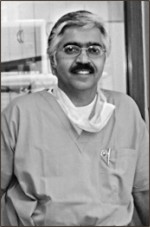
The Daily Star spoke to Dr Ashok Seth, Chairman and the Chief Cardiologist of Max Devki Devi Heart and Vascular Institute of New Delhi, India during his recent visit to Bangladesh.Dr Seth who was awarded India's Padma Shri by the Indian President early 2004 has been an honorary lecturer to the National Institute of Cardiao Vascular Diseases, (NICVD) and the Bangladesh Medical College and he has been visiting the country every year since last eight years. Dr Seth joined Max Devi Devki Heart and Vascular Institute of (Saket) New Delhi, India in November 2004. Dr Seth was Chief of Invasive and Interventional Cardiology, at the Escorts Heart Institute and Research Centre (EHIRC), New Delhi, since its inception. Dr Seth is widely recognised as a leader in the field of interventional cardiology. He is a pioneer in the use of directional atherectomy and stents. Dr Seth, who was awarded numerous national and international awards, has performed the highest number of angiographies and angioplasties in the Asia-Pacific region. He is faculty member of several prestigious international scientific bodies and has been guest speaker at several institutions in India and across the world. During his visit to formally launch a Facilitation Centre of Max Devi Devki Heart and Vascular Institute in the capital he talked elaborately about plans to bring advanced medical technologies for the benefit of patients particularly in the subcontinent. Dr Seth also discussed elaborately on the future of cardiac care in Bangladesh and his contribution to the sector. The Daily Star (DS): What is your purpose of visit to Bangladesh? Dr Ashok Seth (AS): This year the purpose of my visit is little different. You see, after successfully establishing a network of its in India, Max Healthcare is in the process of setting up its international programme through representations in South Asia and a few other places. The countries we already covered include Pakistan (Lahore), Sri Lanka (Colombo) and Nepal (Kathmandu). We also set up similar facilitation centres in, Qatar (Doha), Oman (Muscat) and Tanzania (Dar Es Salam). Similar centers in Singapore, UK, Canada and the United States of America would soon follow. I am here this time to open a facilitation centre already set up in Baridhara, Dhaka. The aim of each center is to facilitate easy and safe transfer of patients in India. The main services in the programme include; Initial screening and diagnosis, clinical evaluation and recommendations, international insurance cover, if applicable, travel arrangements to New Delhi on a turnkey basis including visa, ticketing, pick-up at the airport, money transfer and exchange. On top of this, once our patients arrive we would have exclusive 'Help Desk' and a dedicated relationship manager to offer smooth services like boarding and lodging assistance to suit range of budgets. So the whole idea of a facilitation centre which we have launched with the help of local partner Granville Healthcare Ltd is to extend all out support to our clients before travelling to the hospital for the actual purpose. The idea was developed when we faced numerous queries from attendants of patients or patients themselves. DS: For the past several years you have been training Bangladeshi cardiologists. Have you observed any improvement in standard of cardiac care by those who you have trained? AS: I have noticed gradual improvement in standard of cardiac treatment by those who I have trained in India but the confidence on the local doctors still remain a major problem. I am, however, very hopeful that because the young cardiologists have done so well during training I am sure in years to come they would be able to build that confidence to serve the local patients. You see, confidence cannot be built overnight. It takes time. As more and more cardiologists acquire latest advancement in cardiac interventions more private centres would develop. The state often cannot provide all support that are needed but as I said before, government can always act as catalyst to ensure growth of the private sector. We have to remember good centres leads the pace and encourages others to follow. And as far as quality is concerned, I must admit that most of the private healthcare providers here are focusing on doctors and nursing. If we have to enhance standard of services we have to focus on developing a comprehensive service delivery mechanism not just narrowly seen it in the hands of doctors and nurses since cardiac care involves from the very beginning at the reception to the surgeon doing the open heart surgery. DS: How do you compare cost of cardiac care in Bangladesh? AS: There are three important aspects of cost in cardiac care one is until we are able to reach high tech-professional expertise in cardiac care to the middle class we are not reaching our goals. As far as cost is concerned I must say that all levy on life saving medical accessories must be withdrawn. Unless we are able to control pricing at this end middle class people who need cardiac care would continue to find it costly. The second thing I would like to discuss about is establishment of good hospitals with facilities to offer total care. A patient with heart disease should be able to confidently walk in to such hospital where they would be looked after. Here rich and the middle class both would be coming for treatment but while keeping the standard of services the same middle class and the rich get treated like in a cinema hall where they have separate sitting arrangements but watching the same movie. Here subsidizing prices for the those who cannot afford cost of all the services could be a good idea. Thirdly, third party payment or health insurance could be a good idea which can make people afford such super-specialised healthcare facilities. The concept of private insurance for healthcare is gradually increasing in South Asia even in Bangladesh as I have noticed. DS: We know that you have moved into a new cardiac hospital. What is special about the new hospital and do you also have plans to continue training Bangladeshi cardiologists? AS: Max Healthcare is one of the most modern healthcare facilities in Asia. At the hospital we are focusing on highest professional standard where patient is treated as a valued client. We believe that when a patient walks in she or he should have access to total healthcare services which is why by end of 2005 we are hoping to offer, in a separate but closely located 500-bed building, super-specialisation in areas of - Cardio-vascular, Musculo-skeletal, Neurosciences and Minimally Invasive Surgery. Like the previous years I also have plan to train more Bangladeshi doctors, particularly young cardiologists who are able to return and contribute immensely. Because of its modern facilities at the Max Healthcare all the trainees would be readily exposed to use of the world latest equipment which is an advantage on one hand, while on the other, we hope to hold international workshops which I believe would help the newcomers in advanced technologies in cardiac care. DS: Thanking you for your time sir. AS: Thank you as well.
|