Obesity must be treated as disease
Reuters
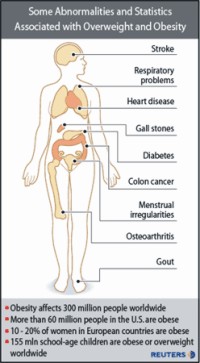
Obesity, which already affects an alarming number people including children, must be recognised and treated as a disease with deadly complications, leading experts opined.Up to 8 percent of total healthcare costs in some Western countries are attributable to obesity and related problems. It is a leading cause of preventable death -- so shedding excess weight is not just about looking good. "Obesity is not an aesthetic problem. It is a very complex problem tightly connected to diabetes, atherosclerosis (blocked arteries) and other major health problems and causes of death," Professor Constantine Tsigos, chairman of the 14th European Congress on Obesity, told. "It has to be treated and confronted seriously." "The emphasis has been put on the complications to increase the awareness of obesity as a disease and a serious condition with many risks associated with it," said Tsigos. Multi-billion pound diet industry
Despite a better understanding of the causes of obesity, a multi-billion dollar diet industry and countless weight-loss programmes and gadgets, the number of overweight and obese people is rising at an astounding rate. In European countries, rates have soared by 10-50 percent in the last decade. In Japan, it has doubled since 1982 and in the United States the percentage of young overweight people has tripled in 25 years. Tsigos stressed that prevention efforts must be geared to the young because excess weight in children is linked to early markers for metabolic syndrome -- a collection of health risks that increase the odds of developing heart disease, stroke and diabetes. The symptoms include a large waistline or "beer belly," high blood pressure, raised insulin levels, excess body weight and abnormal cholesterol levels. If someone has three or more symptoms they have the syndrome. "We should target childhood and adolescents for prevention and treatment as early and as aggressive as we can," he said. Awareness of the problem has increased but he said some doctors still consider obesity as more of an aesthetic problem. Tsigos said treatments are not only aimed at improving weight loss but achieving benefits such as reduced blood pressure, better insulin sensitivity and improved well being. "This will make therapy for obesity more widely acceptable and probably even justified by insurances -- if we can prove the benefits are not simple weight loss," he added.
|