Letter From Mumbai
A book about street children
Menka Shivdasani
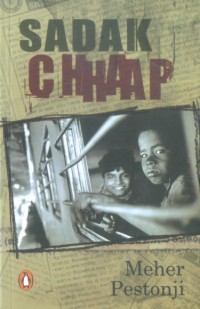
If there is one thing that newcomers to Mumbai find most disturbing until they get used to living in this city, it is the sight of half-naked, unwashed children on the streets. You meet them everywhere--thrusting their hands through your car windows, plucking at your shirt to get attention, sometimes even spitting on your face if you refuse to part with some alms.These children are not merely victims of their own poverty and a wealthy society that simply doesn't care; sometimes they are victims even of their own beggar communities--of parents who see the little ones simply as one more pair of hands to beg with, of gang leaders who break the children's bones just so that they can evoke more sympathy--and thus more money--from passersby. The racket is well entrenched, and most Mumbaikars simply learn to look through these kids and walk on. A diplomat I once knew tells of the time he was nursing a beer at the Mondegar in South Mumbai, watching a woman with a babe-in-arms. He decided that on his way out he would give the woman some money. An hour or two later, while he was still at the pub, he was astounded to see another woman take the place of the first one. "It was like the shift changed," he said later, and never again gave a beggar child money. Instead, he took to carrying biscuits so that the child in question could get something to eat. Over the years, the cause of street children has received much attention. Meher Pestonji, Mumbai-based activist and writer, says that when Mira Nair's film Salaam Bombay! was released--that was in 1988 - there were just five non-governmental organizations (NGOs) working with children; now there are more than forty. Meher herself has worked with some of them, writing newspaper articles about street children since the mid-eighties, campaigning extensively for their rights, and being deeply involved in the case of the Anchorage Shelter in Mumbai, where children were reportedly subjected to sexual abuse by the British national who ran the home. Meher, who was friends with the scriptwriter of the film, Sooni Taraporevala, also got to know the key character of Salaam Bombay! who would come to her home regularly to watch television serials and tell her about life on the streets. Now, the author of Mixed Marriage and Other Parsi Stories. Pervez: A Novel, and a play, Piano for Sale has written a book called Sadak Chhaap. Published by Penguin, the novel draws from the stories she has heard over the years, from the children themselves, and from the people who have worked with them. It's a work of fiction, but firmly grounded in the hard reality of their lives. The subjects she weaves in include the struggle for survival, drug abuse, adoption, paedophilia and various other issues that is the lot of the street child. Some of her NGO friends, Meher says, told her that at first they found the title pejorative (Sadak Chaap is Hindi for Stamp of the Street), but later retracted, since there's no mistaking the stamp of the street on these children--it is like the smells and the sounds are all part of their skin. Meher has been doing some readings from the book in the city lately, and though they certainly aren't the sort of hyped-up affairs that, say, a Harry Potter or even a Shobha De launch would merit, the book has drawn some attention. There is vibrancy to the story--the same energy that you would find in a street child--and many moments that make you smile. There is also a great deal that is moving, because you know that while this is a fictionalized account, every bit of it is grounded in the truth. A baby abandoned at a railway station, a 10-year-old surviving on petty thievery, pre-teens expertly dealing in the tourist sex trade, these are things that Mumbaikars would find unsurprising as they rush to catch their crowded local trains. Meher's story centers around the nimble-fingered Rahul, whose life is transformed when he finds a baby wrapped in a newspaper; he appoints himself the baby's 'father', taking on a responsibility well beyond his years. But crime, loneliness and abuse are never far behind on Mumbai's streets and Rahul finds himself on an unrelenting roller-coaster. "I wanted to leave the reader a little uncomfortable," Meher said, when she read the first chapter to a small but absorbed audience at the PEN office on September 22. "I wanted this to provoke some thought, not a false sense of catharsis." In fact, this was why she chose the form of a novel. "The audience for a work of non-fiction is different; it would have been more like a thesis, reaching out to people who already know. I'd have been sourcing information from the same people and the same people would have been reading it. Hopefully, this novel will reach people who are not as informed, but who would be more sensitized after reading it, and have the power to do something. Sometimes people don't even know what to do, if they see, say, a child bleeding on the street. I would like to use my skill--if I have any--to go beyond having a book do well, and make a difference to those I write about." This is not a transformation she sees happening in a hurry; as she says, "change only happens in ripples." To write this novel, Meher has culled from her own work over more than a decade, while the actual writing of the novel took eight months, which she spent at a hill station close to Mumbai. The effort seems to have been worth it; this is one book that touches close to the bone. Menka Shivdasani is a poet who has published two volumes of poetry, Nirvana at Ten Rupees and Stet.
|
|

