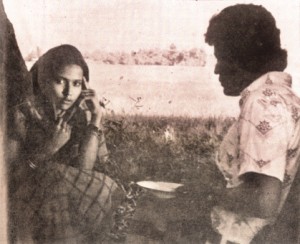
Discussion
Liberation War in Bangladeshi cinema
Ershad Kamol
More films should be made on the spirit of Liberation War so that the nation is not sidetracked from the golden past, said the participants at a discussion session at Bishwa Shahitya Kendra.Bishwa Shahitya Kendra Chalochchitra Chakra (BSKCC) arranged a discussion programme titled 'Liberation War in Bangladeshi cinema' at its auditorium yesterday. Mahbub Jamil was the chief guest while Manzare Hassin Murad and Morshedul Islam were the special guests at the programme. Emphasising on the limitations of making films on Liberation War, Morshedul Islam said, "The main problem is the politicisation of the Liberation War, as a result censor board becomes an obstacle for making cinema on Liberation War. Another major block is the lack of authentic and elaborate documents on the war." "Liberation War can be depicted in several ways in cinema -- either portraying war scenes or through narratives of the struggles of our people. Making movies that feature enactments of war scenes can be very challenging. Not much war equipments or the uniforms of the Pakistani Army of that period are available at this moment," he added. Educationist Abdullah Abu Sayeed said, "One of the problems in depicting the Liberation War accurately is that within years after a major event occurs, people become very emotional; as a result it becomes difficult to critically analyse the event. However, the third generation after a reasonable time span can analyse it properly. We hope the third generation of our Liberation War will make quality movies on the subject." Mahbub Jamil said, "Neither any quality movie nor any elaborate literature is available on our Liberation War. Those that we get are fragmented stories, and in most cases with the same storyline -- Pakistani Army goes in villages and tortures our people. But, we don't get any movie on the determination of the freedom fighters or the psyche as well as tension of the city dwellers in 1971." Chairperson of the discussion, Shah Muhammad Nazmul Alam said, "We should collect the footage of the international TV channels that worked in this region during our Liberation War." "With the available resources a fitting environment can be created", added Alam. After the discussion Zahir Raihan's documentary Stop Genocide, Tareque Masud's film Matir Moina, Morshedul Islam's film Agami were screened. The attraction of the arrangement was George Harrison's Concert for Bangladesh.
|