Botanical Garden demands attention, care
Sharmin Mehriban
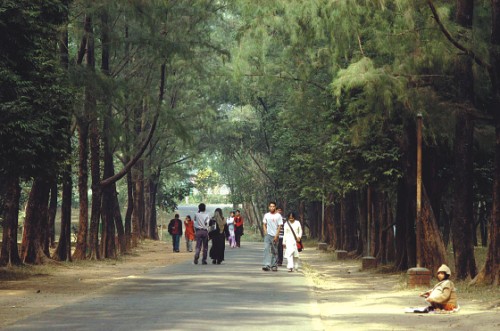
The National Botanical Garden is now plagued with antisocial activities, litter and negligence of the authorities to preserve the green in the city's Mirpur area, alleged visitors.Sparse, worn-out and pest-infested vegetation, weeds, overgrown grass and dried-out ponds are failing to attract real nature-lovers to the garden. The garden was developed in 1961 on 215 acres of land for collecting and preserving plants of various species and performing genetic engineering for the purpose of study and research. Now 208 acres of land are covered in green vegetation and the remaining part is occupied by the air force's radar station. A single botanist studies and treats the plants. Due to the worn-out condition the garden only appeals to couples looking for privacy and to people looking for any reason to get closer to nature, because of the pollution in the city. A swamp with some water lilies in mud and puddles strewn with dead stalks and leaves and a broken tree hanging horizontally at its front could easily be mistaken for a garbage dump unless one sees the signboard that reads "Shapla Pukur" (pond of water lily). The "Golap Bagan" (rose garden) and "Shal Bon" (Shal forest) resemble a commercial nursery with plants grown in pots with hardly any roses in sight and an oasis-like garden in the barren lands of a desert. The place is littered with polythene and cigarette packets. "This place was much better when I started working here as a gardener 30 years ago," said Md Yasin. "It was much cleaner and there were more trees," he added. He could not explain why there are lesser trees at present. Asked about the way they take care of the plants, he said the fertilisers they use are dung mingled with mud and dried-out leaves. Dead trees are incinerated at remote corners. Another gardener declined to say show reason for the pest-eaten plants, saying that they are not allowed to talk to the press. But he said pesticides are applied on the affected plants. Although the entrance fee is Tk 5 a person, many enter the garden through a hole beneath a boundary wall at a certain corner. Some of them collect fallen leaves, which contributes to the garden's cleanliness. But a section of outsiders tend to vandalise the garden by breaking branches off trees, plucking flowers and even by killing birds and butterflies. "The number of visitors has decreased over the years," said a local resident who was born and bred in the staff quarters inside the garden. He pointed out the activities of antisocial elements and vendors bother visitors. Some of the vendors are permitted by the garden administration whereas the others are required to pay a monthly toll to the garden staff. "I have to pay Tk 50 every month to the staff," said Roksana, who earns her living by making henna imprints on the visitors' hands. A rule that forbids visitors from staying in the garden after sunset is also a cause for the decreasing number of visitors. Most offices close after 5:00pm, which coincides with the time, the garden closes. When asked about the dismal state of the garden, an official from the garden administration said they have staff shortage. "Gardeners and security personnel are few in numbers in contrast to a 208-acre area," he said on condition of anonymity. He also said that there are no sweepers at present and that the dustbins in the garden had been broken by the visitors, although a visitor contradicted his view by saying: "It's sheer negligence."
|