Book Reviews
Successful re-legioning
Azfar Aziz
Over the last 50 years, religions have so successfully re-legioned their hordes across the world along political lines that one is compelled to seriously doubt the validity of what one knows as the 'historical' outcome of the Second World War. Generalissimo Mussolini and Führer Hitler did lose the war, but did they lose the peace, too? The doubt and the question did not manifest that strongly until the disintegration of Soviet Union and the fall of the Berlin Wall, or, in other words, until communism was disgracefully reduced to the status of a temporary usurper of the temporal authority of theocracy. In the foreword of the book, Professor Francis Robinson of the University of London puts it thus: "Through large tracts of the world, old social and political elites, often of a 'secular' persuasion, have come to wring their hands as activist believers of one faith or another have come to substantially influence, if not dominate, their politics. There are few Muslim countries where political discourse has not been transformed over this period by the rise of Islamist movements. In some, of course, this has been accompanied by the use of terror and organised violence. The politics of Israel, while acknowledging their complexity and the divisions amongst believers, are profoundly informed by a religiously motivated right wing. Those of the US are much influenced by an evangelical Christian right wing which is willing to firmly place a literal reading of scripture above the claims of modern science. Then, in former communist Eastern Europe, the Protestant and Catholic churches, in particular, played a role in undermining Soviet hegemony. To the surprise of many, in recent times, through much of the world, religion has elbowed its way to the front of affairs." This description reinforces the perception that fascism and nazism had not been routed, but re-emerged under religious and ethnic disguises, and even advanced by some members of the very alliance that claimed victory in the world war. Such political mobilisation based on crude religious or ethnic polarities--'us versus them,' 'either friend or foe' (a la President Bush in his so-called war on terrorism), 'good or evil' and 'black or white'--could not take the centre stage of world affairs as long as the overriding communism-capitalism duel went on. So, "the surprise of many" that Robinson mentions is really rooted in a lack of analytic foresight. Perhaps to understand this 'surprising' situation the Department of International Development Studies, Roskilde University, Denmark arranged a two-day workshop on 'Religious Mobilisation and Organised Violence in Contemporary South Asia' in 2003. This book is a compilation of seven papers presented at that workshop plus a foreword by Robinson and an introduction titled 'Mythology of Communal Violence' by the editor, Ravinder Kaur, a research fellow at the university. Among the paper writers, Professor (Emeritus) Paul R Brass of the University of Washington is a leading proponent of the 'instrumentalist' school of communal violence. Renowned anthropology experts like Professor Jan Breman of University of Amsterdam, Professor Dipankar Gupta of Jawaharlal Nehru University and Professor Thomas Blom Hansen of Yale University are also among the contributors. They have explored and analysed a wide spectrum of issues related to religious violence, organisations and their national or transnational linkages at the empirical and conceptual levels. The issues dealt with in the book include the myths, scale and nature of religious violence, organisations and process of religious mobilisation for politics, the role of state machinery, etc. The workshop's, and the book's, focus on religious mobilisation and violence in South Asia is very pertinent, as amongst all regions the re-ligionisation has been the most pervasive and intense here and in the Middle East, perhaps because they spawned almost all the major world faiths. In these two sub-continents, the economic, political and other conflicts between the peoples almost always appear dressed in religious theories. Giving an overview of the South Asian situation, Robinson says, "In Sri Lanka politics came to be dominated by a Sinhala exclusiveness with the Buddhist revival at its core, which was happy to use violence against the Tamil minority, leading to Tamil separatism." "In Pakistan," he says, "the whole tone and colour of politics has been altered by the rise of Islamist groups within the state, first to positions of leverage and then to ones of power." Acts of violence against the minority Ahmadiyyas, Shias and Christians are common, where recently Baluch separatism has also emerged. "Individuals have increasingly been mobilised for politics less on the old patronage networks of landlords and more on those of religious schools of thought. Indeed, the networks of one, those of the Deobandi madrassas in the NWFP and Baluchistan, fashioned the Taliban who, for a time, came to rule Afghanistan," Robinson notes.India has suffered worse. After the Sikh separatism in the 1960s, it witnessed an intense emergence of Hindu revivalism in the 1980s that has now become one of the most dominant forces in Indian politics. The bloody communal riots carried out by Hindutva bigots also have stoked Islamist fanaticism to a great extent. "We now live in a political world, which the founding fathers of the main independent countries of South Asia--Nehru, Jinnah, Senanayake--would not recognise," Robinson observes sadly. But, a reader cannot but wonder about what Robinson means by "main independent countries." Do not Bangladesh or Nepal qualify for the category? The writers belong to three schools on communal violence -- the instrumentalists, the primordialists and adherents of frame theory. According to the instrumentalists, objective differences between communities and between their revivalism do play a part, but not an essential one, in generating communal conflict. Members of the conflicting communities choose opposing or different paths subjectively and rationally, standing apart from their cultures and traditions. The view of the primordialists is just the opposite. They consider communal conflicts as results of historical, cultural and other differences, not of consciously made decisions. The frame theory stands at a mid-point between those two poles. According to this school, framing means conscious strategic efforts by groups of people to fashion shared understandings of the world and of themselves that legitimate and motivate collective action. Communities, it says, develop ideological frames to diagnose social problems, prescribe solutions and motivate participation of their members in materialising those. What is crucial for effectiveness of a frame is its capacity to "resonate" in a particular context. To achieve resonance, it is not enough for the political agenda to be based on the religious precepts concerned; the leaders also must have authority to which the followers must be receptive, and all must be held in a network of social relationship. The writers from their different standpoints try to explain the widening and increasing incidences and processes of communal violence and religious mobilisation in the sub-continent. The primary focus of the papers is the situation in India, with that of Pakistan getting a secondary place. Only Björn Hettne in his essay gives very brief overviews of the situations in Sri Lanka, Bangladesh, Nepal, Bhutan and the Maldives, which makes, considering the content, the title an absolute misnomer. Sage editors would have done better if they had replaced 'South Asia' with 'India and Pakistan' in the title. The typographic and page make-up is very good. While the book's language tends towards the pedagogic, it will surely help the students of sociologically-oriented disciplines enrich their understanding of the subject. Azfar Aziz is senior sub-editor, The Daily Star.
|
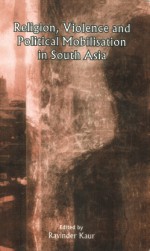
Religion, Violence and Political Mobilisation in South Asia, edited by Ravinder Kaur; New Delhi: Sage Publications; October 2005; 228 pp; Rs. 280 |

