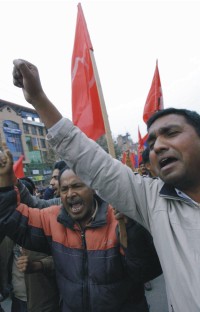
Nepali protests greet win of all the king's men
US slams vote as 'hollow' exercise
Afp, Kathmandu
Pro-royal candidates swept elections in Nepal that were marred by violence and a major boycott, preliminary results showed yesterday as new protests erupted over the polls. Police fired rounds of tear gas at around two-dozen student protesters shouting anti-king slogans near the palace in the ancient capital Kathmandu a day after the polls, which saw a record low turnout. Witnesses said some 500 people crying "Hang the murderers" also massed on Kathmandu's outskirts to protest the army shooting of a protester in west Nepal during the vote, which the king said would be a step to restore democracy by April 2007. With ballots counted in nearly half the 36 municipalities where polls were held Wednesday, candidates mainly from pro-royal parties won the day. The elections, boycotted by opposition parties and disrupted by Maoist rebels, were marked by record low turnout of 21 per cent, the election commission said. The elections were condemned by the United States as a "hollow attempt to legitimise power" by Gyanendra, who seized power a year ago in what he said was a bid to quell the 10-year insurgency by the rebels. State Department spokesman Sean McCormack said the polls were marred by the government's detention of many political activists, restrictive media coverage, violence by Maoist rebels and a lack of monitors. "This is the lowest turnout in the history of elections conducted in Nepal," election commission spokesman Tejmuni Bajracharya told AFP, attributing the small voter participation to "unfavourable conditions." The rebels had threatened to "take action" against anyone taking part, while a rebel-called general strike shut down much of the country in the run-up to the vote. The Rastriya Prajatantra Party (Kamal Thapa) led by Home Minister Kamal Thapa won mayors' seats in 10 municipalities, and independent candidates -- many believed to be backers of the king -- won seven, according to the early results. One seat went to the royalist Nepal Sadhvawana party. Gyanendra sacked the government a year ago and took full power, accusing the government of incompetence in failing to end the Maoist insurgency that has claimed 12,500 lives since 1996. Opposition parties and the Maoists entered a loose alliance against the monarchy last year that has held despite the deaths of more over 140 people since the rebels ended a unilateral ceasefire in early January. "The election is a state-managed farce. It can only damage the future of the country," said Kapil Shrestha, politics professor at Tribhuvan University and human rights activist. "His roadmap toward democracy has led to ruin," Shrestha said. "He has shown his stubbornness and arrogance with a medieval state of mind." "The only effective way to deal with the threat posed by Maoists is to restore democracy in Nepal," US State Department spokesman Sean McCormack told reporters in Washington on Wednesday. "We call upon the king to release all political detainees and initiate a dialogue with the political parties," he said. The state-run Rising Nepal newspaper lauded the election's "peaceful conclusion" while the independent Kathmandu Post and Himalayan Times featured front-page stories about the low turnout and poll protests. Over half the seats up for grabs remained empty due to a dearth of candidates while in 22 municipalities, mayors were acclaimed after no other people ran. The low turnout reflected people's distrust of the king, said Dhruba Adhikary, president of the Nepal Press Institute.
|