Violence in name of religion poses threat to society
Says Prof Rehman Sobhan
Staff Correspondent
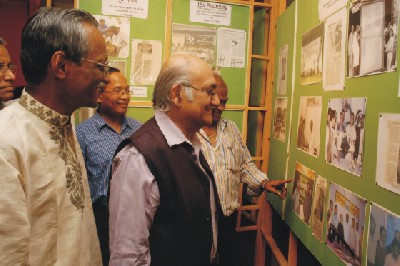
Violence in the name of religion, which the then Pakistani rulers tried to promote in order to mask their anti-democratic rule, is once again emerging as a threat to society, eminent economist Prof Rehman Sobhan said yesterday."Pakistan's experience should have taught us that when ambitious politicians and generals deliberately manipulate religious beliefs to capture power and perpetuate their anti-democratic rule, sooner or later, ideologically motivated fundamentalists will use the same slogans for imposing their beliefs on the people by terror rather than the ballot box," he said. Prof Rehman was speaking on 'Recapturing the spirit of the Liberation War' on the occasion of the 10th anniversary of the Liberation War Museum on its premises in the city. "So far, we had to tolerate ambitious politicians who were cynical in their abuse of religion for political gain without themselves having any commitment to religions in their personal or political practices," he said. "But this phase has now ended and the ideological zealots, armed with bombs, has now emerged in our national arena." Vacuous references about moderate Islam will do little to reverse this tendency towards ideologically inspired terror, he observed. "This trend can only be effectively challenged if the mainstream political parties collectively decide that whilst people should be free to pursue their religious beliefs, this cannot be opportunistically manipulated for political gain, which divides the country into political categories of believers and unbelievers," Prof Rehman said. He said the spirit of the liberation war is adequately captured in the four principles which have guided the constitution -- democracy, nationalism, secularism and socialism meaning social justice. The incorporation of socialism into the constitution was a recognition of the debt of honour owed to the deprived majority, he said. But mass poverty has been perpetuated in 35 years since the liberation while "we have recreated a highly inequitable, deeply unjust society, which has graduated from the two economies which characterised Pakistan, into two societies which characterise contemporary Bangladesh," Prof Rehman added. "Such societies, founded on weak social legitimacy, tend to be more prone to crime, violence and possible social breakdown," he said, adding that the manifestations of injustice in political system itself originates in the injustices in the economic order, which have been accentuated by the policy regimes put in place over the last two decades. Where power, access and immunity from the law are distributed very inequitably, the values of a market driven system tends to aggravate inequalities and injustice, he continued. "We now need to rethink both our policy agendas and to restructure the institutions, which perpetuate such injustice. Policy and allocative regimes have to be put in place which prioritise the ending of poverty by emphasising justice and inclusion so as to give a stake to the less privileged in Bangladesh's development process," Prof Rehman said. He said the country has spawned a democratic order built on confrontation and intolerance where the party elected to office functions with complete disregard to the democratic rights of the opposition. "As a result, three successive parliaments have been rendered virtually dysfunctional and have totally failed to discharge their primary mandate of keeping the executive accountable to the will of the voters through their elected representatives," he pointed out. Consequently, politics in Bangladesh has degenerated into a rich man's game where both women and the financially deprived have been effectively disenfranchised, he added. "The dominance of money has ensured that issues of principle, policy and public service are no longer the motivating force for participating in politics, rather it has become an extension of business and money has become the route to electoral office." Trustees of the museum Rabiul Hussain, Dr Sarwar Ali, Mofidul Hoque also spoke at the inaugural session of the anniversary programme followed by a cultural show.
|