A museum of and for the people
Liberation War Museum turns 10
Karim Waheed
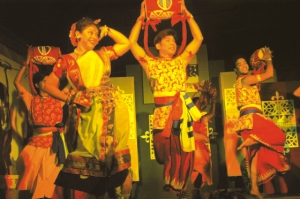
On March 22, 1996 the Liberation War Museum was inaugurated; artistes were singing Muktir mandir shopan toley koto praan holo balidaan -- recalling the sacrifice of millions, the cost of our independence. The state did not take initiatives to put up a museum solely dedicated to display the memorabilia of the Liberation War. Liberation War Memorial Trust took up that imperative task, and it was the masses of our country that stood by the museum over the years -- making it their own organisation. Through the moral support of the public and media's coverage of the cause, the museum has thrived. Donors from home and abroad have helped the museum financially; experts and organisations provided required suggestions. Thus in last 10 years, the museum has become an "institution of and for the people". To mark its 10th anniversary and the 35th Independence Day of our country, the museum launched a five-day celebration from March 22 at the museum premises in Shegunbagicha. At the inaugural, Rabiul Hossain, a member of Museum Trustee Board, said, "The museum was established on the 25th year of our independence with the goal of generating awareness about the carnage carried out by the Pakistani junta so that similar atrocities are not repeated. "We have achieved our independence but I believe Muktijuddho has not ended. The struggle for freedom is a continuing process. We have a long way to go to be free from all kinds of social injustice, corruption and prejudice." Professor Rehman Sobhan took the stage next. He said, "Yesterday's hopes have not really turned into today's reality. In last 35 years, Bangladesh has registered several gains for which we should feel proud but these achievements also remind us how much more we could have made of ourselves where Bangladesh could have fulfilled the promise, which inspired our struggle for nationhood. "Muktijuddher chetona is a phrase we use so frequently and so casually as to be rendered almost devoid of meaning. We invoke this spirit as ritual incantation and rarely bother to ask ourselves what this spirit embodies. The spirit of Liberation War is captured in four principles, which have guided our constitution: Democracy, nationalism, secularism and socialism (which has later been elaborated to mean social justice). Unfortunately, we as a nation have not been successful to ensure the implementation of these principles." Others speaking at the event were Dr Sarwar Ali and Mofidul Haque, members of the Museum Trustee Board. Dance performances by artistes of Nrityadhara followed the lectures. An exhibition titled Ten Years of Liberation War Museum was also inaugurated on March 22.
|