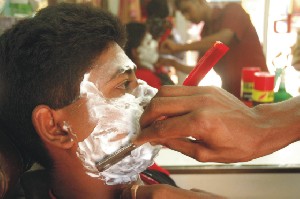
Reuse of sharp items poses health risks
Syed Tashfin Chowdhury
Despite the increasing danger posed by some communicable diseases in the country, numerous clinics, hospitals, dental care and other medical services, along with saloons in the city, have allegedly been using 'used' syringes, needles, blades and other such sharp items on their patients and customers.Thousands of patients and customers are infected daily with viruses and bacteria from over 600 medical institutions and the many saloons and beauty parlours of the city, because of the indifference of the authorities, said health experts. "I went to a hospital a few months back since I had high fever. Three days after I was discharged, I fell sick again. A diagnosis showed that I had Hepatitis," said Robin Podder, a Kamlapur resident. Podder alleged that he was during his stay at the hospital. "It may be possible that the needle that was used to give me a saline drip had been earlier used on a hepatitis patient," he alleged. "Infections carried through blood or venereal diseases can be transmitted through the re-use of articles like needles, syringes and blades," said Dr Saleh Ahmed, a private practitioner. Patients have become more cautious because of the increase in such infections. "I usually ask the nurses and doctors whether the needles are sterilized before they use them," said a patient who was admitted in a clinic in Dhanmondi some time ago, requesting anonymity. Dr Ahmed pointed out that sterilising these items in hot water is an inadequate disinfectant. "Hot water disinfects only glass syringes, which are rarely used in the clinics and hospitals," said Dr. Ahmed. PRISM Bangladesh, a non-government organisation implemented 'The Hospital Waste Management Project' in February 2004, under the Dhaka City Corporation (DCC). Initially medical institutions in Dhanmondi and the Dhaka University (DU) areas were marked for the pilot project. "We tried our best to introduce 'syringe crushers' in the hospitals and clinics in these areas. But most of the hospital authorities did not like the idea as they thought it was very expensive," said Tarit Kanti Biswas, Project Co-ordinator, Hospital Waste Management Project, Prism Bangladesh. 'Crushers' are equipment with which the infectious part of syringes can be effectively disposed of, after use. City-dwellers also complained that saloons and street-side barbers still follow the old method of re-using used blades. "I have come across a number of barbers, who were about to re-use an already used blade," said Ramzan Ali of Nilkhet, who used to shave at the area's saloons, earlier. "I have now stopped going to the saloons after becoming aware of the diseases that I can be infected with in such situations," he said. But some barbers of the city claimed that they have long discarded the practice. "Such unethical practices would actually lead a barber to lose his customers. And no barber would want that," said Nayeem, a barber from Karwanbazar. A similar complaint was also brought by city dwellers about various dentists, spread all over the city. "Gum diseases and a lot of other infections can occur from the use of used syringes. I am not sure whether these matters are properly looked into by concerned authorities," said Moffazel Karim, a resident of Dhanmondi. However, most dentists claimed that they have been using disposable syringes. "When I am about to use sharp instruments or syringes on my patients, as a measure of good will, I show the items to the patient. This makes the patient feel secure," said Dr Maruf Hossain, a dentist and member of the Bangladesh Dental Society. He pointed out that some dentists in the Tongi, Badda, Rayerbazar, Old Dhaka areas are still not using disposable syringes due to the lack of supervision and inspection by concerned authorities. "If the authorities were stringent about the laws and initiated a drive against them, these dentists would have been caught by now," said Dr Hossain. Despite repeated attempts, no one from the Health Department of DCC could be contacted to comment on the issue. Meanwhile Prof Dr Md Shahadat Hossain, Director General, Health Services said: "We are taking steps toward increasing awareness about crushers and hospital waste management in various medical institutions. We are also planning to initiate the use of Auto Disable (AD) syringes, which are approved by the World Health Organization (WHO)". He also pointed out that not just the medical institutions; there should be a strict law for saloons as well to reduce the risk of infections through used blades.
|