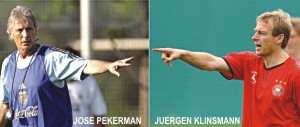
Germany v Argentina
As big as it gets
Reuters, Berlin
Germany and Argentina were responsible for one of the worst World Cup finals ever played when they last met at this level in 1990 in Rome.There is little danger of another clash of such cynicism and sterility 16 years on in Berlin this Friday when the best young attacking teams in the tournament meet in the quarterfinal. "Argentina are a top team but we know we can beat them," Germany's leading striker Miroslav Klose said ahead of a game that will be eagerly watched by 72,000 at the Olympiastadion and hundreds of millions around the world. "And we really want this victory." Germany, the three-times World Cup winners, have taken to their home tournament with the zeal of a convert, abandoning their old caution and pouring players forward in support of Klose and his 21-year-old strike partner Lukas Podolski. The pair have scored seven of Germany's 10 goals in four straight wins against Costa Rica, Poland, Ecuador and Sweden. Germany's new commitment to attacking play is a tribute to the revolution worked by Juergen Klinsmann, who was part of the West Germany team that beat Argentina 1-0 in that terrible 1990 clash to avenge their 3-2 defeat in the Mexico '86 final. Even FIFA president Sepp Blatter has been moved to wonder, "Who can stop these Germans?" Argentina, who won the World Cup in 1978 as well as 1986, might have the answer. Their quick-witted forwards have supplied the tournament's best moments, including a 6-0 win over Serbia and Montenegro that will live long in the memory. Argentina also beat Ivory Coast and drew with Netherlands before sealing victory over Mexico thanks to a wonderful goal from midfielder Maxi Rodriguez. Luis Gonzalez has recovered from a groin injury and should be fit to play at right midfield. But fullback Nicolas Burdisso is still doubtful with a knee injury. The speedy Leandro Cufre is likely to deputise ahead of Lionel Scaloni, who played against Mexico, and Fabricio Coloccini, Burdisso's replacement against Netherlands. Klinsmann will name his first choice team. Germany have not beaten one of the game's major powers since a 1-0 win over England in October, 2000, although they came close in two 2-2 draws with Argentina in 2005. If Friday's game is all-square after 90 minutes then Germany would surely be the favourites to win in front of a partisan crowd during extra-time and perhaps even penalties. "If I'm on the pitch I wouldn't have a problem taking a penalty," said Lionel Messi, who will likely come on as a substitute. "But I wouldn't like to get to that stage. "I'd rather settle it in the 90 minutes or in extra time like (we did) against Mexico." Key Quotes
German midfielder Torsten Frings: "We're all in top physical condition and we'll do everything to beat them."Argentina forward Lionel Messi: "We've already shown we are in good shape and playing good football and that we can stand up to any rival we face." Teams
Germany (4-4-2)
1-Jens Lehmann; 3-Arne Friedrich, 21-Christoph Metzelder, 17-Per Mertesacker, 16-Philipp Lahm; 19-Bernd Schneider, 8-Torsten Frings, 13-Michael Ballack, 7-Bastian Schweinsteiger; 20-Lukas Podolski, 11-Miroslav KloseArgentina (4-4-2)
1-Roberto Abbondanzieri; 17-Leandro Cufre, 2-Roberto Ayala, 6-Gabriel Heinze, 3-Juan Pablo Sorin; 22-Luis Gonzalez, 8-Javier Mascherano, 10-Juan Roman Riquelme, 18-Maxi Rodriguez; 7-Javier Saviola, 9-Hernan Crespo Head To Head
Argentina v Germany head-to-head record (FIFA records)
Argentina lead 4-3 with three draws 1958: Argentina 1 West Germany 3 (Malmo) 1966: West Germany 0 Argentina 0 (Birmingham) 1986: West Germany 3 Argentina 2 (Mexico) 1987: Argentina 1 West Germany 0 (Buenos Aires) 1988: West Germany 1 Argentina 0 (Berlin) 1990: West Germany 1 Argentina 0 (Rome) 1993: Argentina 2 Germany 1 (Miami) 2002: Germany 0 Argentina 1 (Stuttgart) 2005: Germany 2 Argentina 2 (Dusseldorf) 2005: Germany 2 Argentina 2 (Nuremberg) Tactics
Hosts Germany will use a direct, aggressive style in a 4-4-2 formation inspired by playmaker Michael Ballack in Friday's World Cup quarter-final against Argentina, whose own 4-4-2 revolves around playmaker Juan Roman Riquelme dictating the pace of their short-passing game.GERMANY
Defence: Germany are bolstered by two big centre halves in Per Mertesacker and Christoph Metzelder. They have both improved after a nervous start during the 4-2 win over Costa Rica and dealt well with Sweden in their second round match but they have yet to face forwards of the calibre of Argentina's. Philipp Lahm loves to get forward on overlapping runs on the left with Bastian Schweinsteiger and scored a cracking goal against Costa Rica, the first of the tournament. Arne Friedrich on the right is slower and the obvious weak point in defence. Midfield: Ballack gives Germany great presence in central midfield, snapping at heels and funnelling the ball with economy when the team are under pressure. A great header of the ball, he is also a danger at set pieces. The bruising Torsten Frings backs him up in midfield. Schweinsteiger always looks to cut in from the left or pass to Lahm rather than beat his man, while Bernd Schneider on the right has more defensive work to do to back up Friedrich. Attack: Striker Miroslav Klose has been superb, scoring four goals and providing a natural target for long balls from the back. His 21-year-old strike partner Lukas Podolski is a great natural finisher and is oozing confidence after scoring three times in the last two games. Oliver Neuville, who got the winner against Poland in the final minute, likes to run at defenders and will be an option as a late substitute. Speedy right winger David Odonkor could also be a threat from the bench. ARGENTINA
Defence: Argentina have a classic back four in which Roberto Ayala acts as the last man with Gabriel Heinze generally picking up the opposition's main striker, though both will be called on to make quick interventions to counter Germany's fast twin spearhead of Klose and Podolski. On the left flank, captain Juan Pablo Sorin defends well and also adds punch to the attack, often making diagonal runs into scoring positions. The weakest defensive link is at right back where the speedy Leandro Cufre is likely to stand in for the injured Nicolas Burdisso. His pace will be needed to counter the threat from Germany's overlapping left back Phillip Lahm. The other options on the right are Lionel Scaloni or Fabricio Coloccini. Midfield: Argentina appeared to have found the right midfield balance with Luis Gonzalez on the right wing and Maxi Rodriguez on the left against Serbia & Montenegro. Injury to Gonzalez with the score at 1-0 meant Esteban Cambiasso, more of a holding midfielder, came back in but he helped keep the team up in the opposition's territory to cement a scintillating 6-0 win. Javier Mascherano is the tireless ball winner who plays better alone rather than sharing the burden with a teammate, like Cambiasso. With the wingers he helps keep Juan Roman Riquelme supplied in the area immediately in front of the box where his superb short and long passes find the strikers. Attack: Only this Argentina team could enjoy the luxury of keeping players like Carlos Tevez and Lionel Messi on the bench, keeping them in reserve for potential match-saving roles. The coach's striking vote has gone to Hernan Crespo, who has scored once in each of his three appearances, and Javier Saviola, playing with the freshness and skill of his River Plate days. Saviola roams across the front of the attack while Crespo hovers in the box, although Mexico's tactics of keeping the ball in Argentina's half in their second round match meant Crespo often had to drop deep and he may find a similar problem with Germany. General: Germany like to attack from the start and have scored early goals in three of their four matches. They have so far shown no inclination to sit on their leads, always going forward looking for more. It remains to be seen how vulnerable their defence will be to the darting runs of the Argentina players, or how the team would react to going a goal or two behind. Argentina have fended off late pressure well and have enough talent on the bench to keep any defence busy.
|