Theatre
Gharami: The tale of downtrodden people
Ershad Kamol
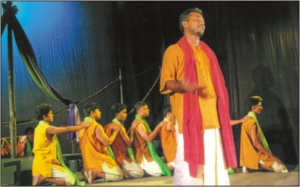
THE heroic deeds of the downtrodden people in remote areas during the Liberation War have not been highlighted much while depicting the history of freedom struggle of Bangladesh in 1971. Alok Basu's play, a Natyadhara production, features the bold resistance of the Gharamis (a carpenter community who make house and boats in the greater Barisal region), against the Pakistani military regime during the Liberation War. As a sub-plot, Gharami features the misuse of religion for personal interest as well as the missionaries' endeavour to convert the minorities to Christianity in the remote areas. The play is based on the dialect of Barisal. As the director of the remade production of Gharami, Litu Sakhwat has unfolded the story with narratives. He has used rituals, folk games and sports in his directorial compositions. And with the synchronised body movement he has created different actions such as making of boats and journey by boats. However, a lacuna is that while Litu has created many 'visual actions' to make the play colourful, most are not relevant with the tempo of the play. The director would do well to go more for perfection rather than variety in his directorial compositions. Zunaid Eusuf's set and light design is simple but effective. Using rope and curtains, he has created a suggestive house at the middle of the backstage, while the remainder of the performing space remains empty. Litu Sakhwat's music composition for the play is effective. Litu Sakhwat performed well as the protagonist. Fariha Tabassum Shimu was also impressive. However, the other actors should put their hearts into their respective roles. Natyadhara staged Gharami at the Experimental Theatre Stage on July 14.
|