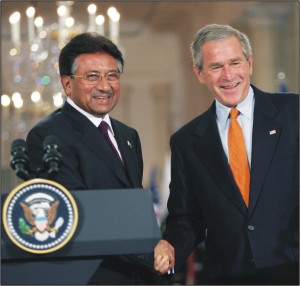
Pakistan leader's 'Stone Age' revelation shows weakness: Analysts
Afp, Islamabad
President Pervez Musharraf's disclosure of a US threat to bomb Pakistan if it did not back the war on terror may have been meant as a sop to domestic opponents, but made him look weak instead, analysts say. Experts said they were baffled why military ruler Musharraf had brought up the five-year-old alleged warning shortly before a crucial meeting Friday with US President George W Bush. "It is a bad reflection on the Pakistani leadership that it buckled to pressures despite the fact that we are a powerful nation with a strong army and nuclear power," former army chief General Mirza Aslam Beg told AFP. "America threatened Iran with dire consequences -- but have they succumbed to the pressure?" asked Beg, who now runs his own think-tank. Musharraf, who supported the US-led ousting of Afghanistan's Taliban regime after the September 11, 2001 attacks, said former deputy secretary of state Richard Armitage made the threat to Pakistan's then head of intelligence. "The intelligence director told me that (Armitage) said, 'Be prepared to be bombed. Be prepared to go back to the Stone Age'," Musharraf said in the CBS interview. "I think it was a very rude remark," Musharraf says in the interview due to be broadcast Sunday. Armitage has denied making the comment, saying only he had warned Pakistan that it was either with the United States or against it as it went after the perpetrators of the 2001 suicide plane attacks that killed nearly 3,000 people in New York, Washington and Pennsylvania. Analysts suggested Musharraf may have been explaining the pressure he was under to his domestic audience in this Islamic republic of 150 million people, where anti-American sentiment is widespread. Muslim hardliners and opposition parties in Pakistan regularly accuse Musharraf of being a US lackey. Islamic extremists have tried to kill him three times primarily because of his ties to Washington. But if the statement was meant for Pakistanis it was "poor management of public relations", defence analyst Talat Masood said. The public would ask how the United States could be so "rude and aggressive" when it was meant to be an ally, he added. Musharraf's anti-terror alliance with Washington is already strained. Bush told CNN on Wednesday he would "absolutely" send US troops into Pakistan if he knew Osama bin Laden was there. Musharraf quickly rejected the idea. Islamabad has also brushed off months of carping by US and other officials that it is failing to stop Taliban militants based on its soil from launching attacks in neighbouring Afghanistan. "Musharraf's statement (on the bombing threat) reflects the fragile nature of our relations with Washington," Masood said. He said it may be a fact that Musharraf had acted in his country's interests by bowing to US pressure after the attacks "but what Musharraf will achieve by saying so, I am baffled." Columnist and political analyst Mohammad Afzal Niazi also described Musharraf's statement as "confusing" but suggested that it could be to gain publicity for his autobiography, which is due to be published soon. "It is just before the launch of his book," Niazi said. Musharraf's revelation would also increase anti-US feelings here, he said. "It obviously does not make America very popular. For many it would mean the US is a bully." Beg said Musharraf's so-called revelation on US television was especially puzzling as the alleged threat been already been reported in Pakistani papers soon after the 2001 attacks. "This news is five years old," he said. "He probably wants to remind his bosses in Washington how obediently he followed their diktat."
|