Home away from home
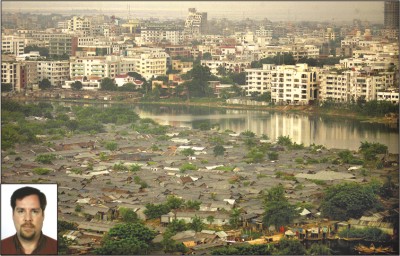
Kyle Scott, regional programme manager (South Asia) and national director, Habitat for Humanity (HFH), Bangladesh, who has been living in Bangladesh for the last 20 years, shared his feelings.I first came to Bangladesh with my parents in 1973, when I was only eight. They came to help build the Lambs Hospital in Parbatipur in the Dinajpur district. My first impression about the country, as an eight year old, was a place very different from the United States of America, my home country. There were nice sceneries but also open sewers and the smell with which I was unused to. The extent of poverty was very striking to me even though I was a child. I was fascinated at the vendors shouting to sell vegetables and the call-to-prayer. I did not have any preconceived notion other than what I had heard from my parents. My father was the field director of the hospital, which was officially opened in 1983. It all began in 1950s when a man named John Otteson who was working in Parbatipur realised that there was a great need for medical services in the locality. The vision became a reality when three members of the American Santal Mission and World Mission Prayer League accepted it and visited my parents to convince them about the project. My parents also built Lutheran Health Care Centre at Dumki in Patuakhali. They are now working with the World Mission and spend half the year in Bangladesh. In 1990 after my education was complete I returned to work at the Lambs Hospital where I was the director for eight years. I left Bangladesh again for 3 years to finish Masters in Global Leadership and returned in 2005 to work for HFH. My love for Bangladesh and her people makes me come back to this country again and again. I love the people, their hospitality, the social life, the Bangla New Year and the varieties of food and restaurants. My wife and I are fluent in speaking Bangla. We participate in the festivities of the bijoy dibosh, the Victory Day in Dinajpur. In the last 15 years, Dhaka's traffic has increased incredibly specially in the period 2002 to 2005. When I first arrived, there were very few cars. Even in 1990 the traffic was quite manageable. I feel sad at the level of poverty. It is difficult to face the poor knocking on the car window every day. The main focus of my job is urban housing for the poor. Yesterday we celebrated the 500th house in Bangladesh for the poor. We want to promote housing through housing microfinance. Dhaka is a very active, bustling and crowded city. There are areas where business is thriving. But there are also underdeveloped areas where, with the influx of rural poor, housing, utility and infrastructure is under intense pressure. I have lots of memories of Dhaka. I will take back both good and bad memories. There are many positive things about Dhaka and her development. But I will also not forget the beggars on the street. As told to Durdana Ghias
|